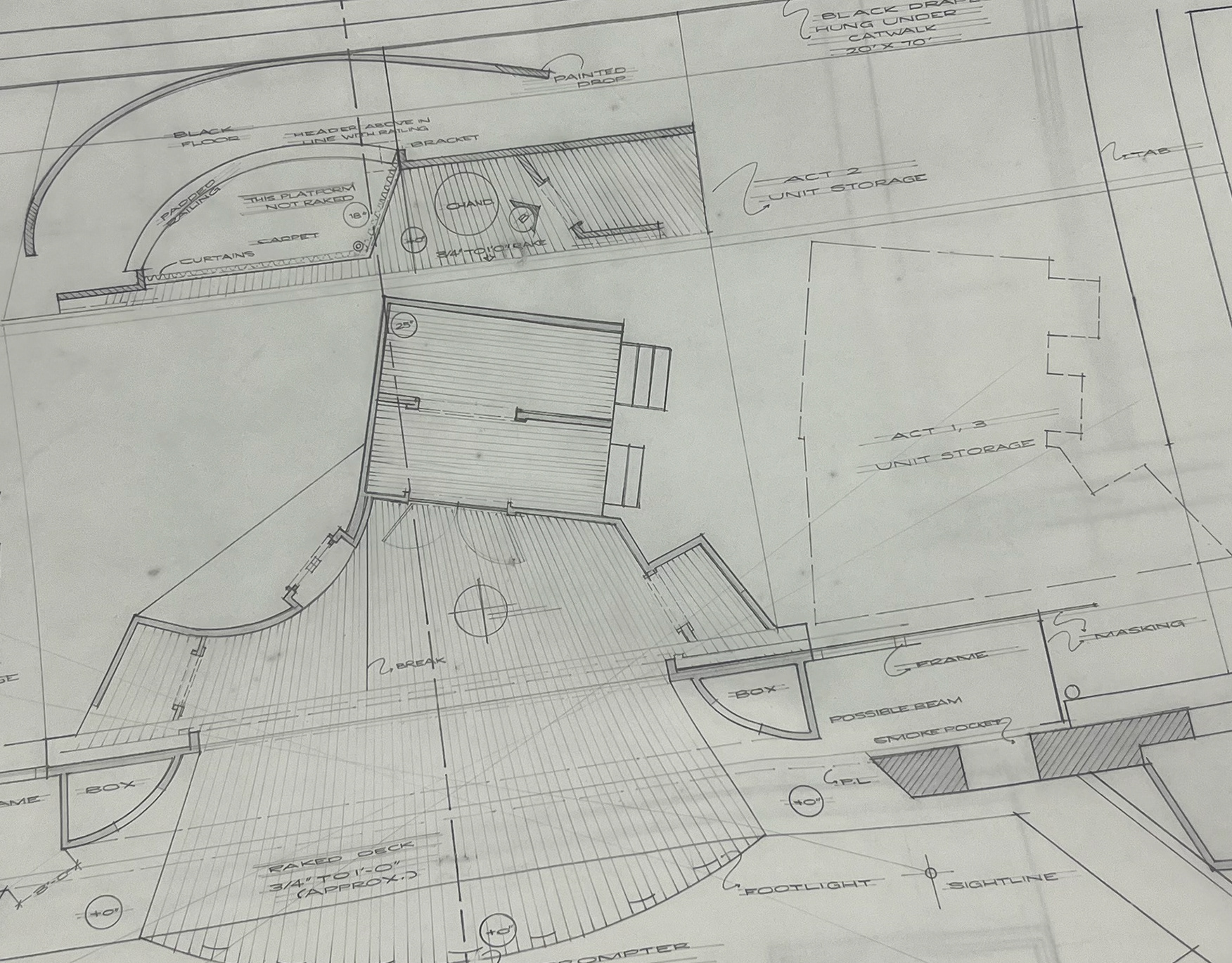
Crossing beyond Welcome’s presentation of urban prosceniums that demarcate Asian American foodscapes and exist on a parallel plane across from the viewer, Sit considers the stages that exist on a perpendicular plane beneath and constitute and facilitate Asian American foodscapes. Using ground plans that represent paradigms of popular Asian cuisine restaurants in the United States — the rotary sushi restaurant, the hot pot restaurant, the hibachi restaurant, and the dim sum restaurant — I illustrate how each space’s gastropraxis — “the production, circulation, distribution, preparation and consumption of food… the corporal, embodied experiences of food consumption” — contests and capitalizes on stereotypes associated with Asian Americans. Take, for example, the booths, large tables, and private rooms that evidence the initial, rapid, and selective popularization of group dining for Asian cuisine restaurants in the United States. This can be understood in the context of the emergence of an Asian American sensibility during the 1970s — following the 1965 Immigration and Nationality Act that facilitated family reunification — heavily associated with collectivism and family-orientedness.
Notably, none of the etymological formations of the selected restaurant paradigms are direct, linear translations but negotiations of linguistic imperialism. “Rotary sushi” idiomatically translates the first half of kaitenzushi (回転寿司) while retaining a transliterated version of the latter due to its pre-established ubiquity; “hotpot” is essentially a word-for-word translation of the Chinese huǒ guō (火锅) but is utilized as a catch-all term for methodologically similar Asian dishes like Japanese sukiyaki (すき焼き) and shabu shabu (しゃぶしゃぶ), Korean jeongol (전골), Thai suki (สุกี้), and Vietnamese lẩu; lastly, although “dim sum” and “hibachi” pose as convincing preservations, they are, in fact, words that are incorrectly used in the American context to index what are actually called yǐn chá (飲茶) and teppanyaki (鉄板焼き), respectively. Here, heteroglossia is the product of America’s positioning of Asian heritage languages as both an intolerable anachronism and a profitable novelty. This manipulation is particularly evident in the case of Japanese Americans. Unlike other Asian ethnic groups in the United States, Japanese Americans are not a majority first-generation population and according to the Children of Immigrants Longitudinal Survey (CILS) from 2000, display higher rates of identification as unhyphenated Americans compared to other Asian ethnic groups that tend to identify as hyphenated American or unhyphenated ethnic by national origin. Following the classical assimilation model of gradual heritage language loss, this distinct generational makeup and identificational assimilation has adversely affected heritage language retention among Japanese Americans, suggesting that the minimally altered — albeit incorrect — English phonology in the nomenclature of Japanese cuisine within the American context has little to do with Japanese Americans and, instead, indicates the national appetite for cosmopolitanism and the use of Japanese language as a signal of authenticity to satisfy said appetite.
Sit probes at linkages — similar to those noted with attention to the seating offered by the selected Asian restaurant paradigms and the names that they go by — between the gastropraxis facilitated by ground plans of Asian cuisine restaurants in America and Asian American racialization. To draw from Tommy Wu’s distinction between racialized labor and racializing labor, then, it is less an investigation of the concentration of Asian labor in the restaurant industry (racialized labor) and more an exploration of the racial meaning making that takes place as a result of it (racializing labor). As above, this exploration reveals attributes shared by the four spaces, pointing towards the fabrication of a distinct demographic and identity on the frivolous basis of continental origin. The impetus of this project and “Asian American Foodscapes” as a whole, however, is not the denouncing of this arbitrary categorization but, rather, the historicization and examination of its ongoing implications in Asian American identity formation. As such, the text that follows refers to restaurant paradigms by their colloquial “American” names — rotary sushi, hot pot, dim sum, hibachi — to index their popular “American” forms.
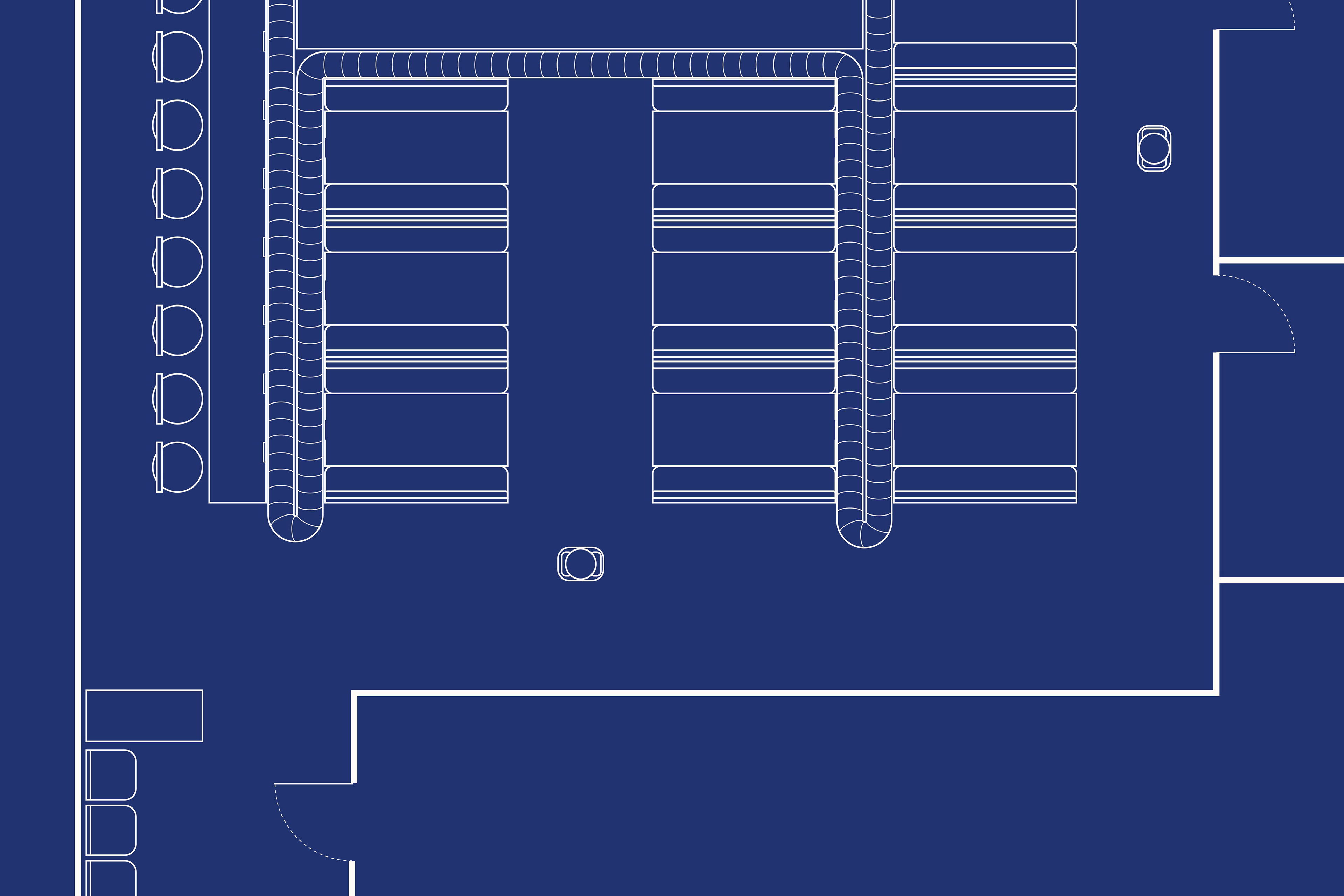
Genroku Sushi, the first rotary sushi restaurant, was opened in 1958 by Yoshiaki Shiraishi in Osaka, Japan. During a time when sushi was reserved for the wealthy, this standing-only bar prioritized convenience and affordability for a customer base primarily made up of local factory workers and rendered sushi accessible to the masses of average Japanese citizens in so doing. After rotary sushi was displayed at the 1970 Osaka World Exposition, however, it quickly rose to global popularity not as a convenient and affordable lunch break option but as a fun, family-friendly excursion featuring booth seating, robot servers, and touch-screen ordering systems. To the late 20th century international market that largely considered Asian food to be unfamiliar and unsanitary, this gamified version of rotary sushi provided a site of adventurous, cosmopolitan exposure while keeping diners’ sense of safety and power in tact by allowing them to assert control over the amount, selection, and pace of consumption. The gastropraxis of rotary sushi, thus, relies on and reproduces techno-Orientalism, the figuration of Asians as soulless, mechanical automatons enacted to alleviate Western anxieties pertaining to NICs (newly industrializing countries) like Japan. In a typical American rotary sushi restaurant today, customers interface more with robots and touch screens than servers and chefs, profiting from and validating the techno-Orientalist synonymization of Japaneseness with technological determinism and efficiency.
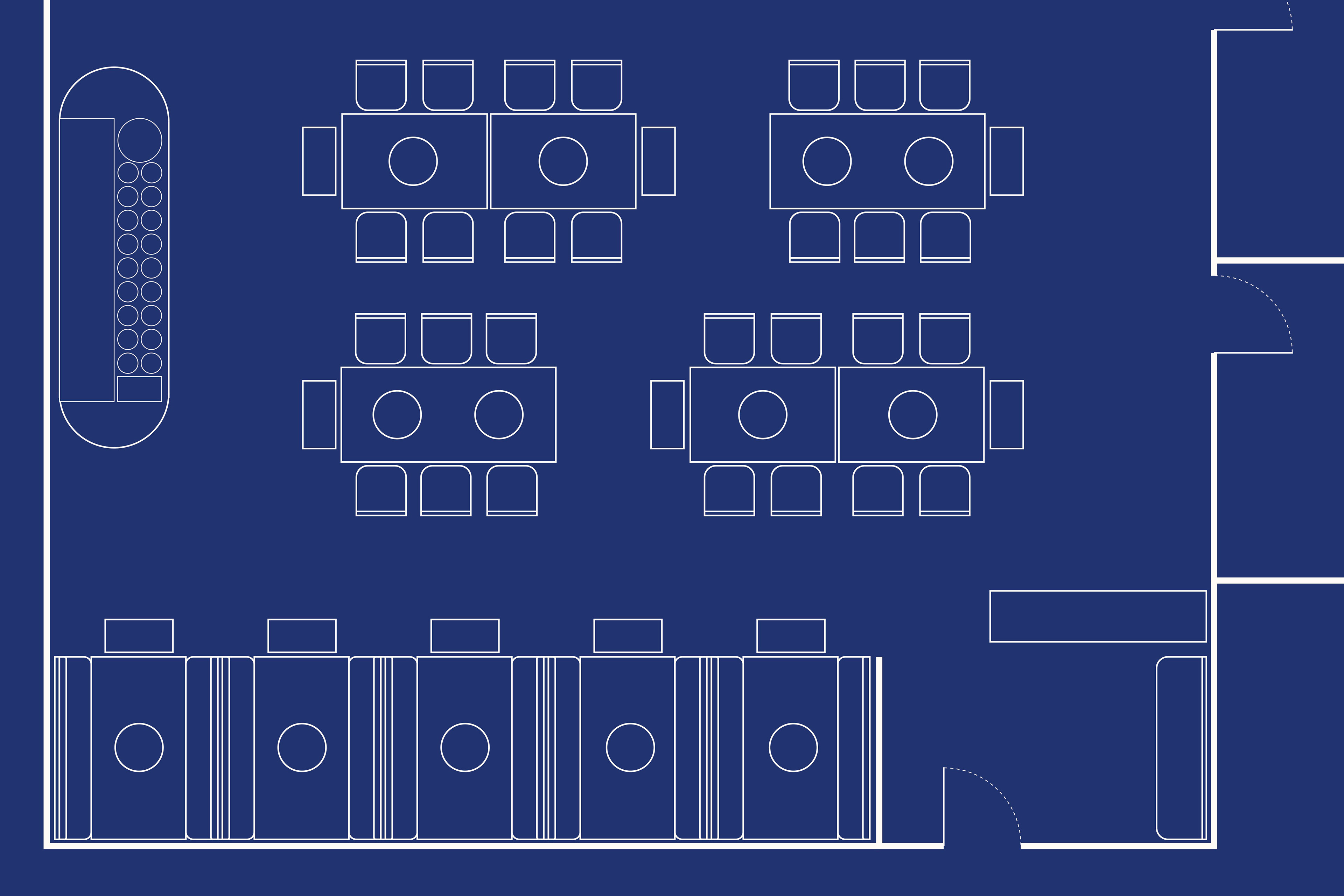
The gastropraxis of hot pot, where diners cook various ingredients in a simmering broth at their table, is less futuristic and overt in its employment of technology but similar to rotary sushi in that diners dictate their consumption experience via a selection of broths offered at the beginning of the meal, vegetables and protein ordered throughout the meal, and an open bar of dipping sauces available to compliment the meal. The necessity of diner autonomy and server/chef anonymity in the indulgence of both rotary sushi and hot pot, two very well known paradigms of Asian cuisine in America, speaks directly to the West’s simultaneous appetite for and apprehension with the East. This paradox is also pertinent —though, manifested slightly differently — in the gastropraxis of the two remaining restaurant paradigms: dim sum and hibachi.

Dim sum originates from tea houses in Guǎngdōng, China that served Silk Road travellers. Today, establishments often feature roaming carts pushed by waiters (often women) offering steaming baskets full of dumplings, sticky rice, buns, etc., which get placed onto a revolving lazy susan tray. This creates an interactive dining experience as customers must track, beckon, and dismiss waiters throughout the duration of their meal as well as rotate the lazy susan to reach and share the plates, once again enabling them to control the amount, selection, and pace of consumption. Seemingly opposite to rotary sushi and hot pot, labor in a dim sum restaurant is hypervisible, and this is similarly true of hibachi restaurants.

At hibachi restaurants, diners gather around a flat griddle to watch a cooking routine complete with martial arts gestures, hyperbolic Asian accents, and fire and knife tricks. Notably, this performance is constructed to orientalize and emasculate the chef-performer — typically men, though not always Japanese or even Asian — which differs from how dim sum restaurants display and facilitate but do not necessarily inflate the national construction of Asian immigrant women as oriental and docile. Rather than being a negation of the previously made statement regarding White anxiety about the growing social capital of Asians and Asian Americans, hyper-visibility of labor within widespread Asian restaurant paradigms, as in the case of the circulating dim sum carts and the theatrical hibachi chefs, perceptible subservience is an alternative way in which Asian and Asian American restaurateurs mitigate White anxiety.
Speaking specifically to Asian fusion restaurants and hibachi performances, Wu writes that “The central feature… is not the food but the dining experience” and that “The production of orientalism is not solely a Western project.” Both of Wu’s assertions are also true of the restaurant paradigms showcased in Sit. Indeed, when diners show up to a rotary sushi restaurant, hot pot restaurant, dim sum restaurant, or hibachi restaurant, they expect not only to satiate their hunger but also their curiosity — a prevalent expectation that is the result of not only the Western project of Orientalization but also the financially rewarding and thus recurring response of Asian American self-Orientalization. In identifying these paradigms — which are not conventionally experienced alongside one another — and grouping them together, I invite viewers to conceptualize independent establishments as components of a broader, interdependent institution. The artistry of Sit arrives less through the actual execution of the ground plans and more through the innovative employment of drafting — as in both the process and product of mechanical articulation and artistic expression in architectural practices (architecture, landscape design, urban planning, set/production design, etc.). Due to its own ambivalent likeness to and distinction from the colonial apparatus of cartography, drafting is a fitting way of exploring the counterintuitive reality of being Asian American.
As elucidated in John Brian Harley’s essay “Maps, Knowledge, and Power,” maps, despite posing as empirical surveys, are more aptly described in both form and function as imperial schemas. The commissioning of the map has always been prompted by a desire to expand, preserve, or assert power, resulting in a work laden with distortions, omissions, accentuations, and decorations, through which the desired hierarchy of the client is projected (e.g. the omphalic positioning of one’s own nation as the literal and symbolic center of the world) and enacted (e.g. the drawing of arbitrary lines to divide and distribute territory). As these documents are circulated and imposed, utilized for education and navigation, and removed from their political imperatives, they transform into retrievable, rhetorical, resonant, and retentive cultural objects.
While similar to cartography and maps in its two-dimensional engagement with space, drafting differs in two key ways. Firstly, compared to geographical maps that are devoid of population — so much so that Harley speculates that maps “not only facilitate the technical conduct of warfare, but also palliate the sense of guilt which arises from its conduct” — human navigation is an important consideration in architectural drafting. This is seen in Sit through the inclusion of the conveyor belt, robots, table stove openings, lazy susans, and dotted lines that indicate door swing, pathways/traffic, and field of vision — none of which is structurally essential but all of which is central to the dining experience. Secondly, drafting has a dialectical relationship with the specific site it illustrates in that it typically precedes and guides the technical construction and visual realization of it. When adapted from its intended purpose — as I have done with Sit — to instead record an existing paradigm of a physical and cultural space, drafting is an ideal alternative medium with which to subvert the fixed accuracy asserted by maps as it negotiates objectivity and subjectivity, structuralism and functionalism, and circumscription and agency.
More in Visual Design