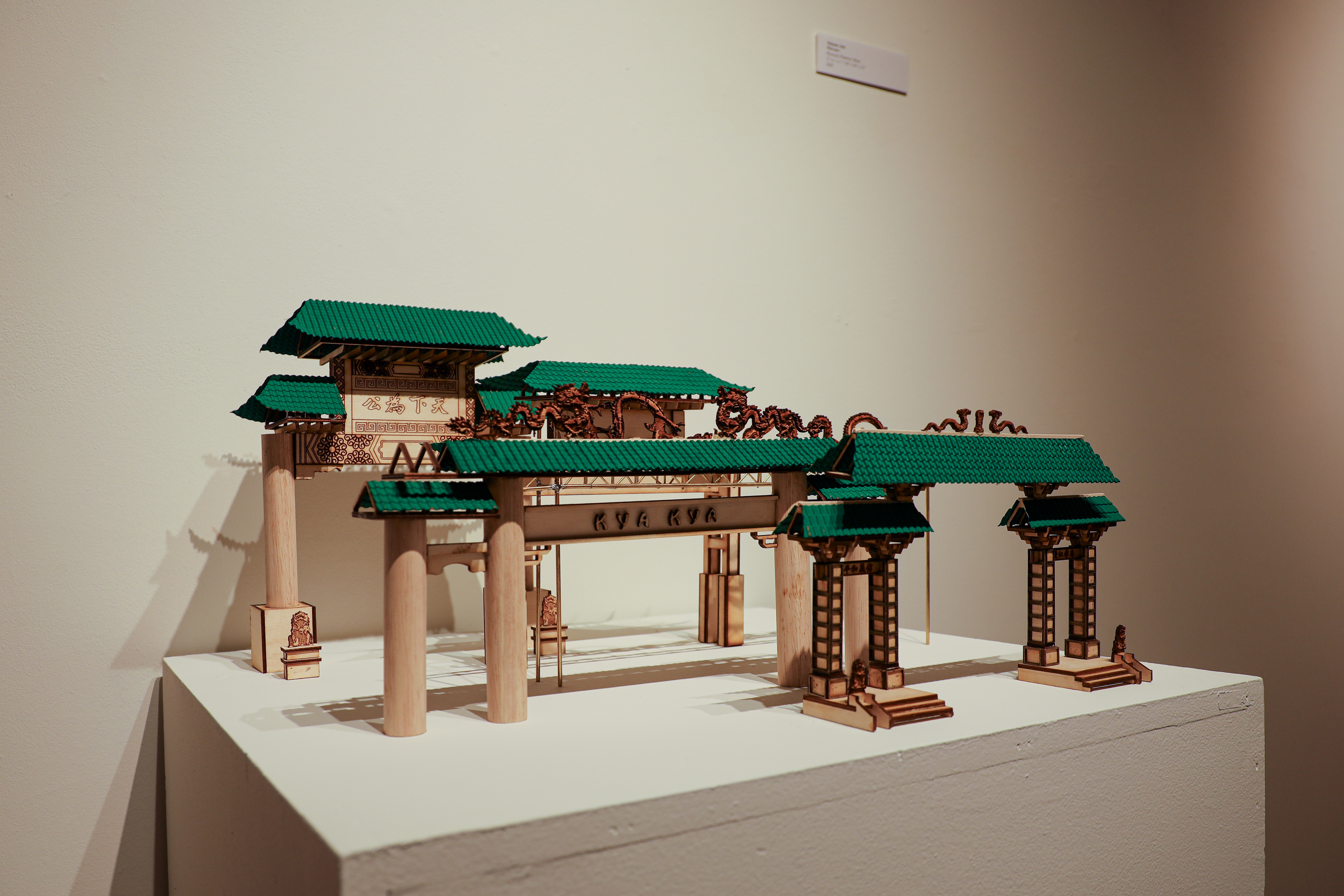
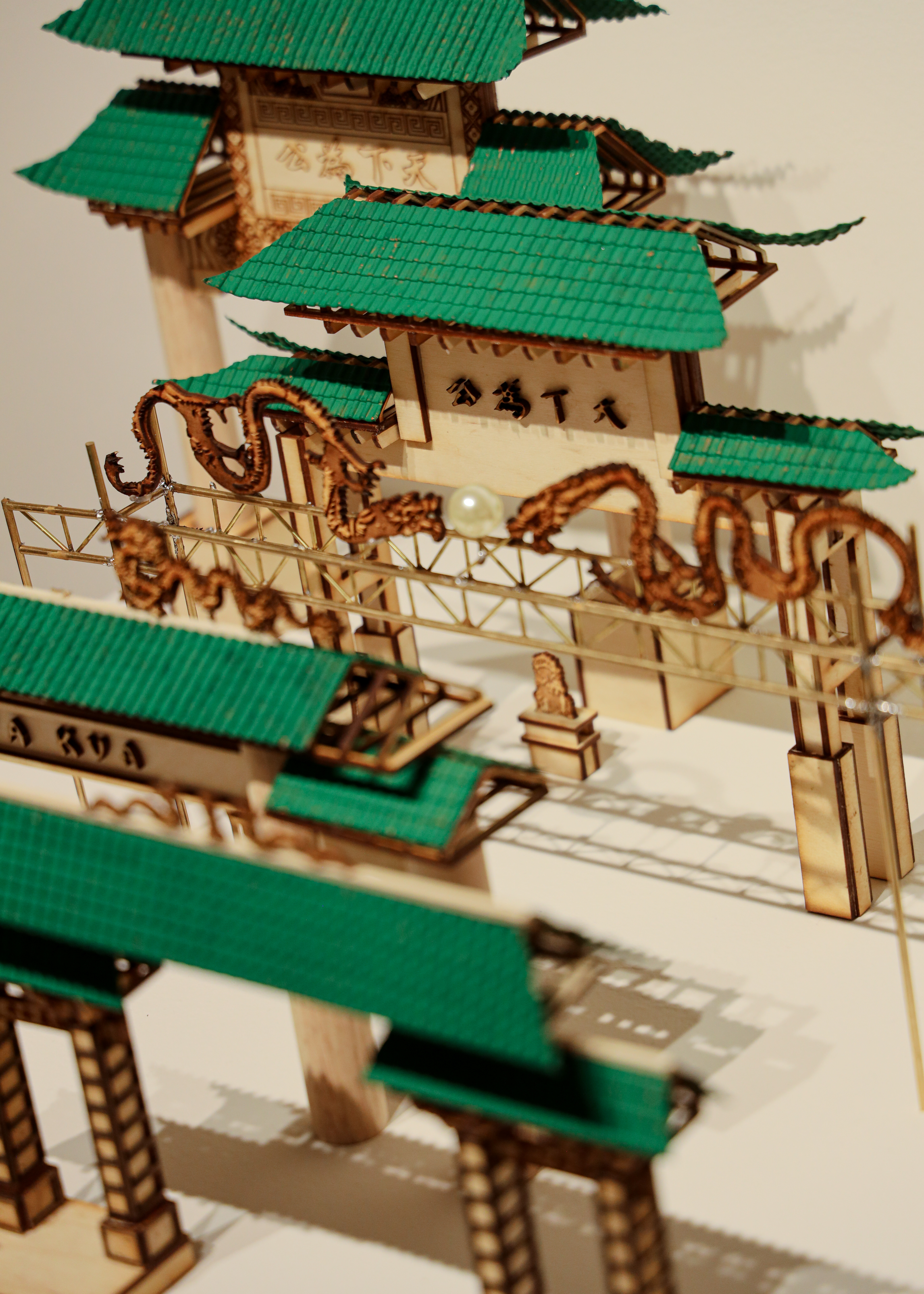
Within Asian American foodscapes, one particular architectural artifact stands out as a seemingly ubiquitous aesthetic feature: the Chinatown welcome gate. Across the country, these arch-structures vibrantly announce your arrival at neighborhoods that have become increasingly associated with the consumption of culture through food — an association that the gates themselves played a critical role in constituting. Although modeled off of the decorative tiles, animal motifs, and multi-tiered and gabled roofs characteristic of Chinese páifāng/páilóu (排放/牌楼) architecture, the function of these gates are markedly different when they are vernacular (local in regards to material, labor, and design) versus when they are polite (nonnative and highly decorative). In Ming and Qing dynasty China, páifāng/páilóu were regarded as “crystallized urban memories” that honored governance, accomplishments, and ancestry and were utilized as navigational tools. Abundance and ubiquity, thus, were imperative in informing the impetus and interpretation of the structure, whereas the Chinatown welcome gate — as accurately as it may attempt to replicate a Chinese páifāng/páilóu — relies specifically on the visual signalling of architectural politeness — novelty, difference, otherness — and the marketability of multiculturalism.
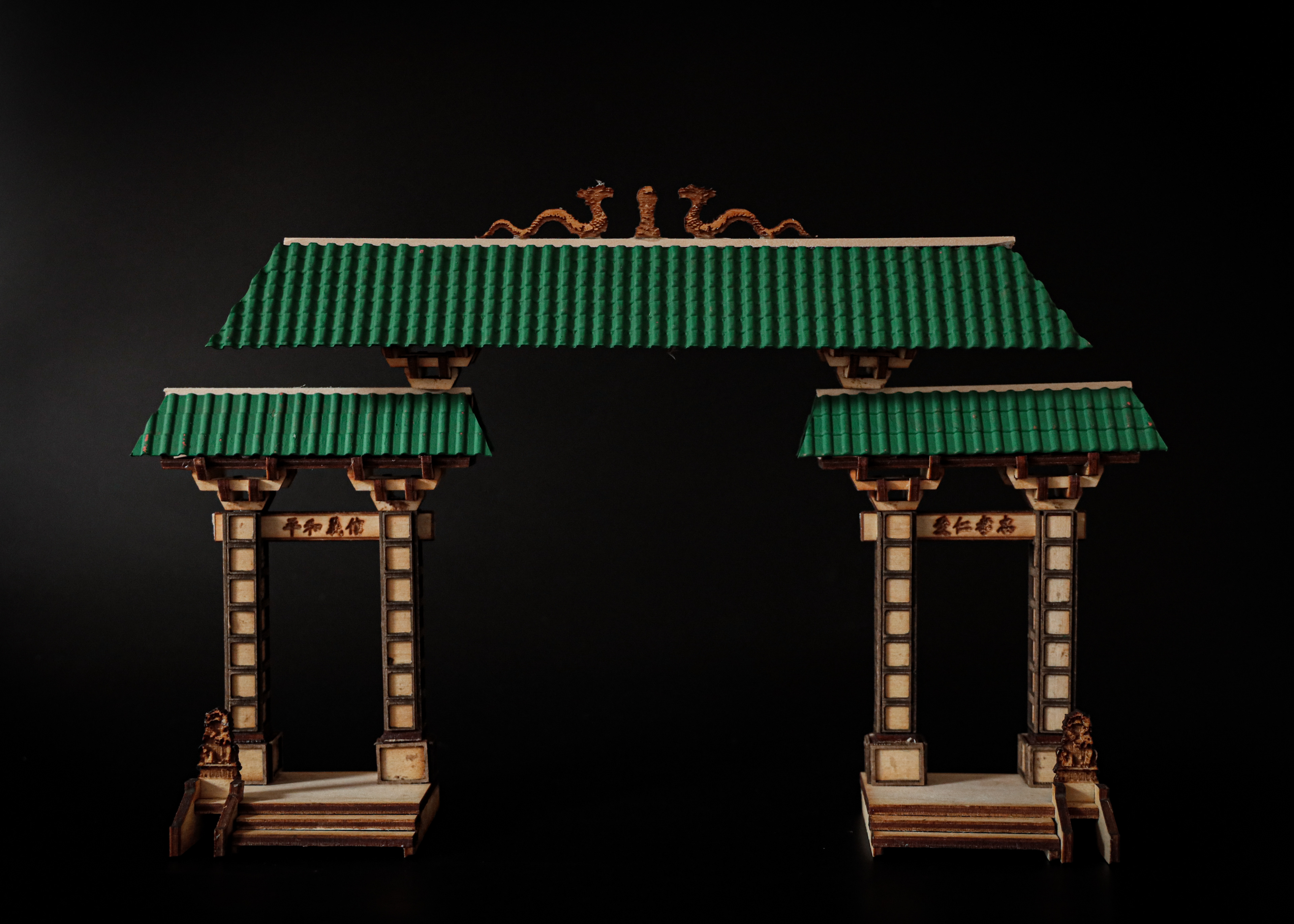
America’s first permanent gate, the Dragon Gate in San Francisco designed by Chinese American architects Clayton Lee, Melvin H. Lee, and Joseph Yee, was installed in 1969 but first proposed in a 1953 Chinese Chamber of Commerce essay contest submission as a way to boost tourism following the United States embargo on Chinese imports. From the outset, then, the purpose of the gate was never commemorative but wholly commercial. By “combining the oppositional expressions of familiarity and difference,” the gates transformed White America’s perception of Chinatown from dangerous, unsanitary, and barbaric to ‘‘Chinatown: An Exotic Yet Comfortable Place to Visit.” Importantly, this operation was conducted against the backdrop of “greater number of working women, fewer members per household, rising income, later marriages, higher divorce rates, and more education” which ultimately lead to a shift in the 1970’s — directly following the completion of San Francisco’s Dragon Gate — characterized by a greater sense of leisure and adventure, both of which were satisfied through a newfound appreciation for the practice of dining out.
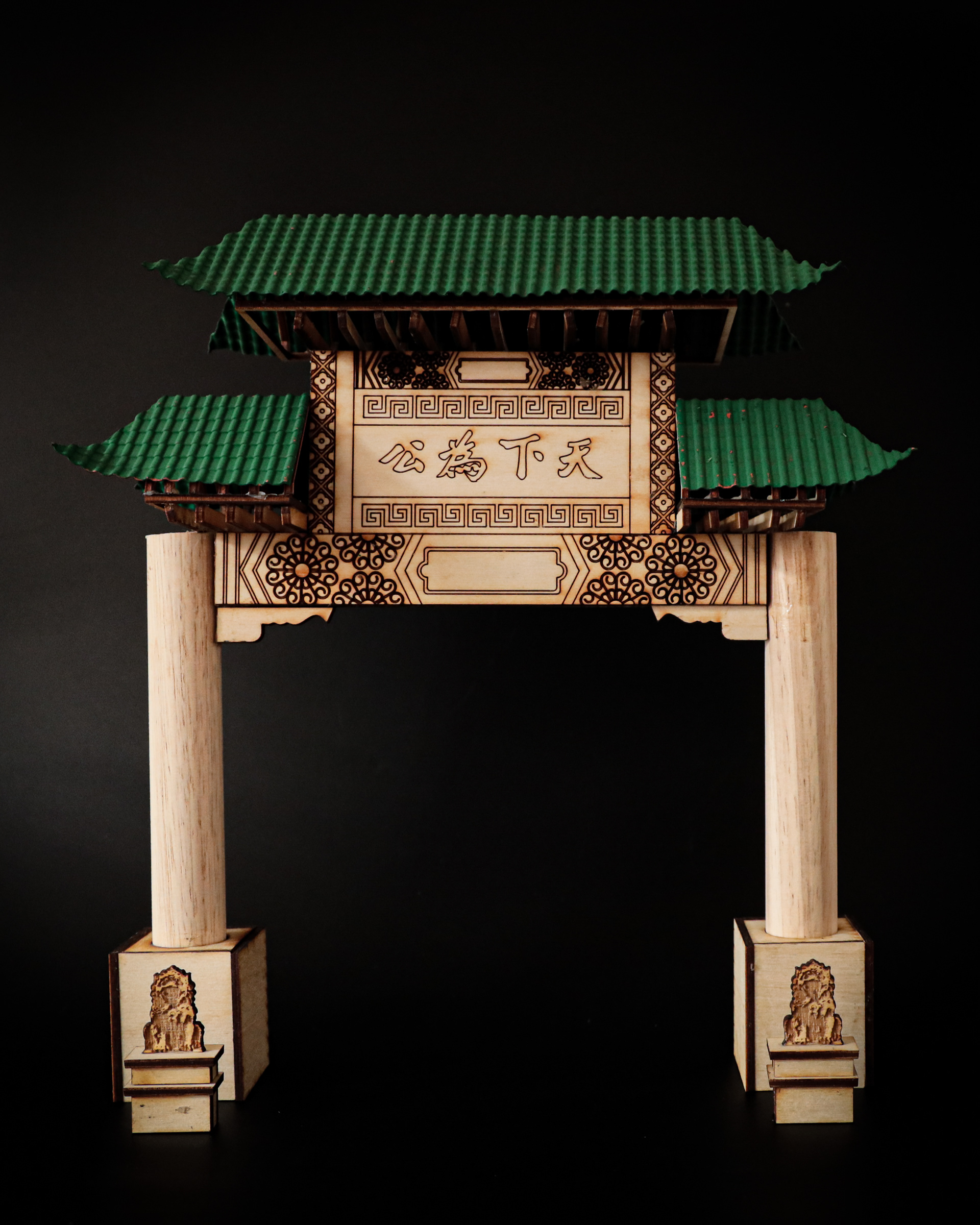
The next decade would reinforce the commercial function of the gate as well as establish its diplomatic value. Across the North American continent, various Chinatowns took their cues from San Francisco and began installing their own welcome gates with the help of sister cities. In 1982, Boston installed a gate gifted by Táiběi; in 1983, Philadelphia installed a gate gifted by Tiānjīn; in 1987, Edmonton installed a gate gifted by Hā'ěrbīn; and the list continues. Boston's gate offers a particularly intriguing look into commerce and diplomacy. The China Trade Gate — as it is officially called — was commissioned by Boston’s China Trade Center in 1976 in response to community concerns regarding the shortage of visitors to Chinatown. That year, the Táiwānese government sent a 25-ton package containing the green tiles and marble lion statues that would become the gate’s key features — as well as the source of anxiety surrounding the optics of a major United States city installing a gate donated by Táiwān in the time leading up to the United States’ 1979 switch from the official recognition of Táiwān to Běijīng. Additional delay was caused by a need for supplementary funding, for which the primary advocates of the project appealed to then-mayor Kevin White through the registration of Chinatown voters. Boston eventually received permission from the United States State Department and necessary funding from the Edward Ingersoll Browne Fund to install the gate, but the complex politics of acquiring these means evidences the fact that both sister city contributions and local support were not motivated merely by generosity and good will but, importantly, economically and diplomatically charged.
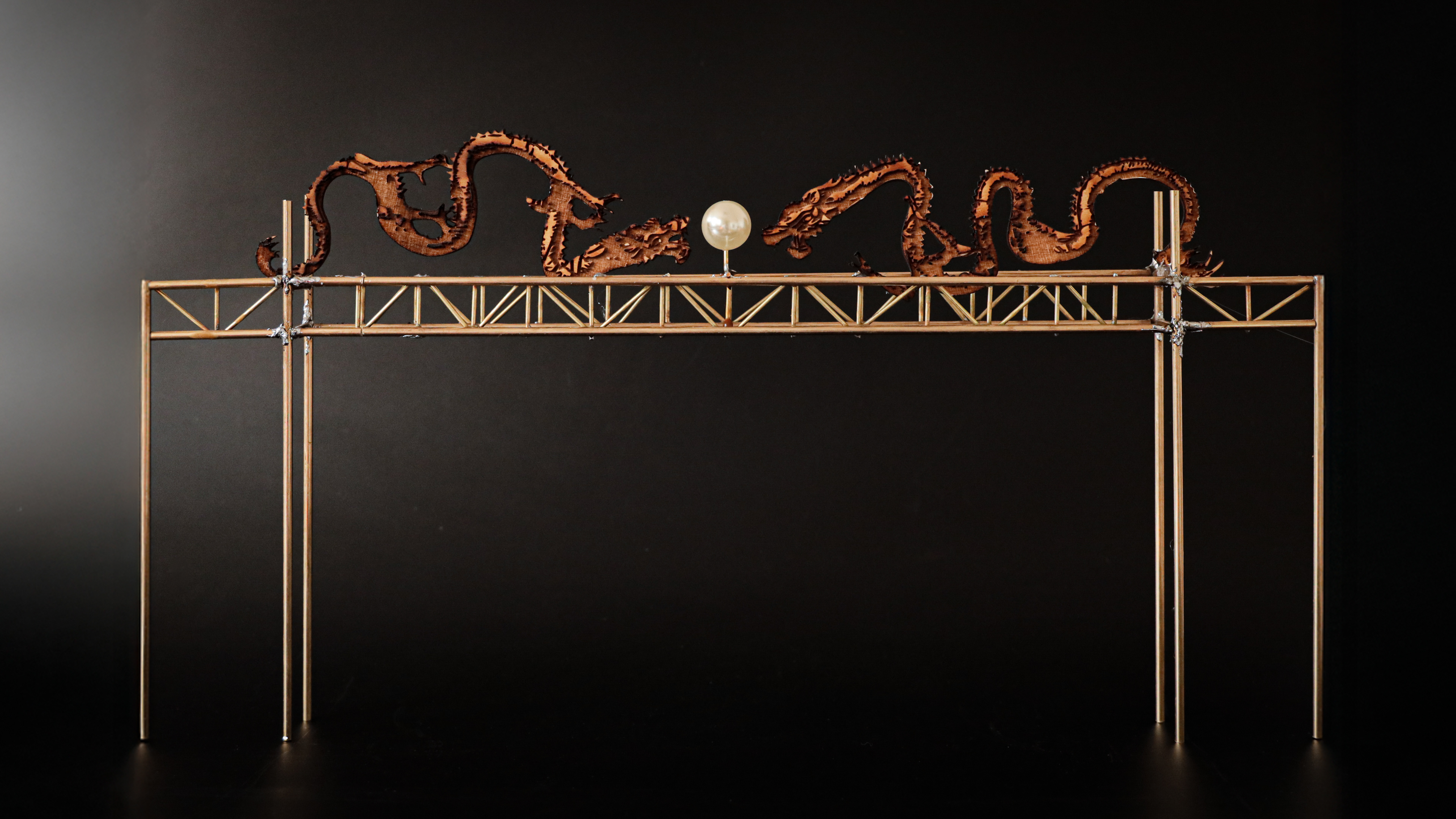
If the end of the 20th century established a distinctly American application of páifāng/páilóu architecture largely centered around fiscal revenue, political rapport, and United States-China relations, the beginning of the 21st century marked a visual and conceptual departure from this tradition. The Los Angeles Chinatown Gateway Monument installed in 2001, for instance, trades in carved stone, curved tile roofing, and animal detailing for welded steel truss and two gargantuan fiberglass dragons that look “alive” due to their asymmetrically dynamic design and placement atop aluminum mesh clouds. Additionally, the recurring inscription of “ 天下为公” (tiānxià wèi gōng, which translates to “The World Belongs to the Commonwealth”) featured in the aforementioned Dragon Gate and China Trade Gate are replaced by four plaques: one that features the word “Wisdom” in both Chinese (智/zhì) and English, one that features the word “Harmony” in both Chinese (和/hé) and English, and two that designate the gate as a monument that “is a strong visual symbol of mutual cooperation, harmony and prosperity for the Community and the City” and “honors the rich ancestry, culture and history of the Chinatown Community.” These radical design choices make the Los Angeles Chinatown Gateway Monument both the furthest stylistic departure from traditional páifāng/páilóu architecture and the most faithful mimetic return to them. Like the gates of Ming and Qing Dynasty China erected for its attendant community and unlike the gates of American Chinatowns that advertise an antiquity, it is vernacular to its surroundings and explicitly celebrates local Chinese American residents. This is not to posit that the Los Angeles Chinatown Gateway Monument renders the financial and political purpose of the gate completely obsolete but, rather, to suggest that the new century marked the specification of a uniquely American architectural style and sensibility that invites visitors while simultaneously pronouncing Chinese American arrival and belonging, ascribing a two-part meaning to the descriptive “welcome.”
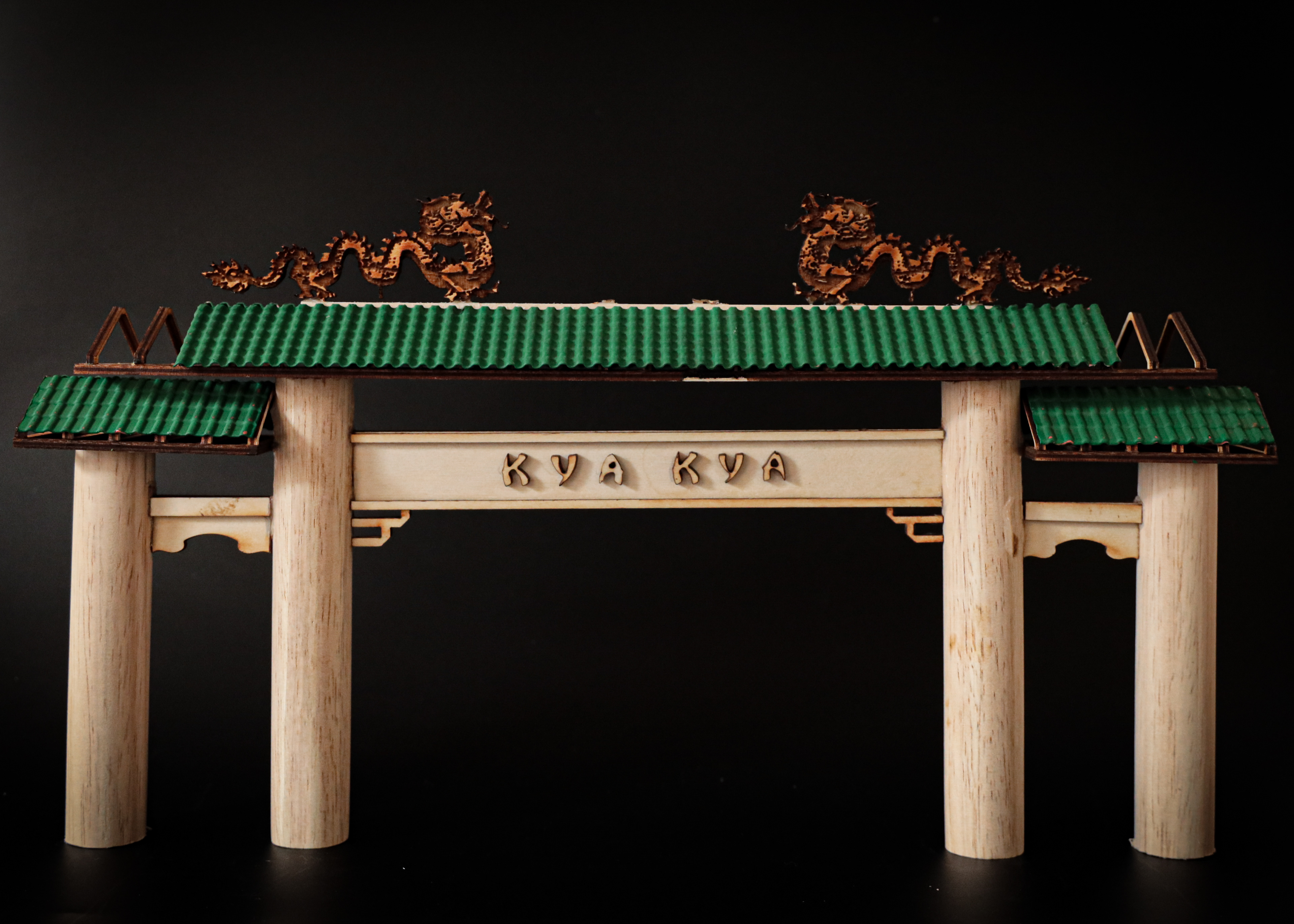
This template can be seen in diasporic Chinese neighborhoods around the world and in notably great numbers following the turn of the century: Kya-Kya Gate was installed in Surabaya, Indonesia in 2003; Chinesisches Tor was installed in the Hague, the Netherlands in 2009; Pagodepoort was installed in Antwerp, Belgium in 2010; Binondo Chinatown Arch was installed in Manila, the Philippines in 2015. Like the aforementioned gates in the United States, these gates were designed to evoke Ming and Qing Dynasty páifāng/páilóu architecture with the primary intent of catalyzing tourism. As Filipinx scholar-educators Erik Akpedonu and Czarina Saloma observe, however, the gates in Southeast Asia — where “Chinatowns developed in tandem with the colonial European city” — are strikingly ineffectual compared to their Western counterparts — where revivalist architecture is embellished by “occasionally superimposed elements of “classic” mainland Chinese architecture.” Indeed, the dialectical Kya-Kya Gate was part of a plan launched after the annulment of restrictive laws against the Chinese in Indonesia to rebrand the highly regulated Chinese settlement Kembang Jepun into an attractive, semi-open food court. Due in large part to Chinese Indonesians relocating and adopting new lifestyles, the initiative was deemed unsuccessful and discontinued in 2008. In a similar vein, the archway in Manila, despite claiming the titles of largest and newest, has been subject to passionate criticism regarding its imposing nature and its inability to reflect the unique glocalization of Chinese culture in the Philippines in the same way that surrounding architecture and food does. In both of these case studies, the gate attempts to touristify a demographic that rejects being tethered to food service and preservationist commodifications of culture.
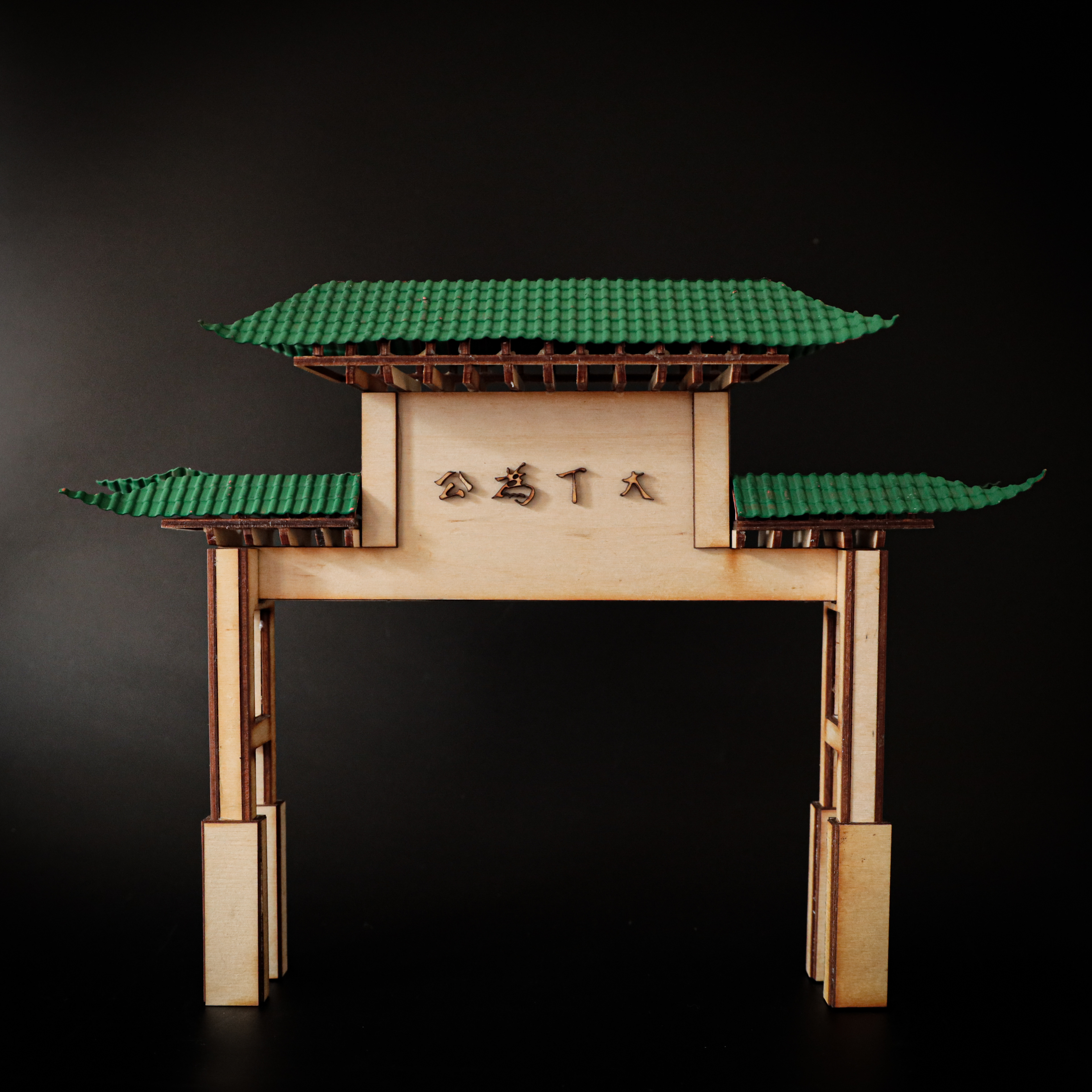
The economic and affective “failure” of Chinatown gates in Southeast Asia highlights welcome gates’ purpose of managing Chinese diasporic subjectivity’s relationship to food and association with exotic otherness. Thus, the gates operate similarly to multicultural and ethnic-specific art exhibition practices, which Susette Min complicates as an efficient but nonetheless immutable, reductive, and essentializing curatorial artifact. This is a particularly important argument to apply to the gates because they are not merely decorative architectural types that exist within Asian American foodscapes but, as narrated above, commercial, diplomatic, and social portals into Asian America. Today, major American cities continue to recognize and invest in the value of Chinatown welcome gates. In 2016, various organizations in New York came together and hosted the “Gateways to Chinatown” competition in search of a design for a gate in New York’s Chinatown. In 2019, the Build Illinois Bond Fund granted the Department of Commerce and Economic Opportunity $50,000 to use for the renovation of the Chicago Chinatown Gateway. In 2020, restoration of the Friendship Archway in Washington, D.C. — which had been displaying “cracking, loose tiles, non-functioning light sources, peeled paint” — was completed. Clearly, the Chinatown welcome gate is here to stay. As such, it becomes increasingly important to understand it as not a pure transplant but “invented tradition” that “enables the institution of an essentialist notion of the ethnic community.”
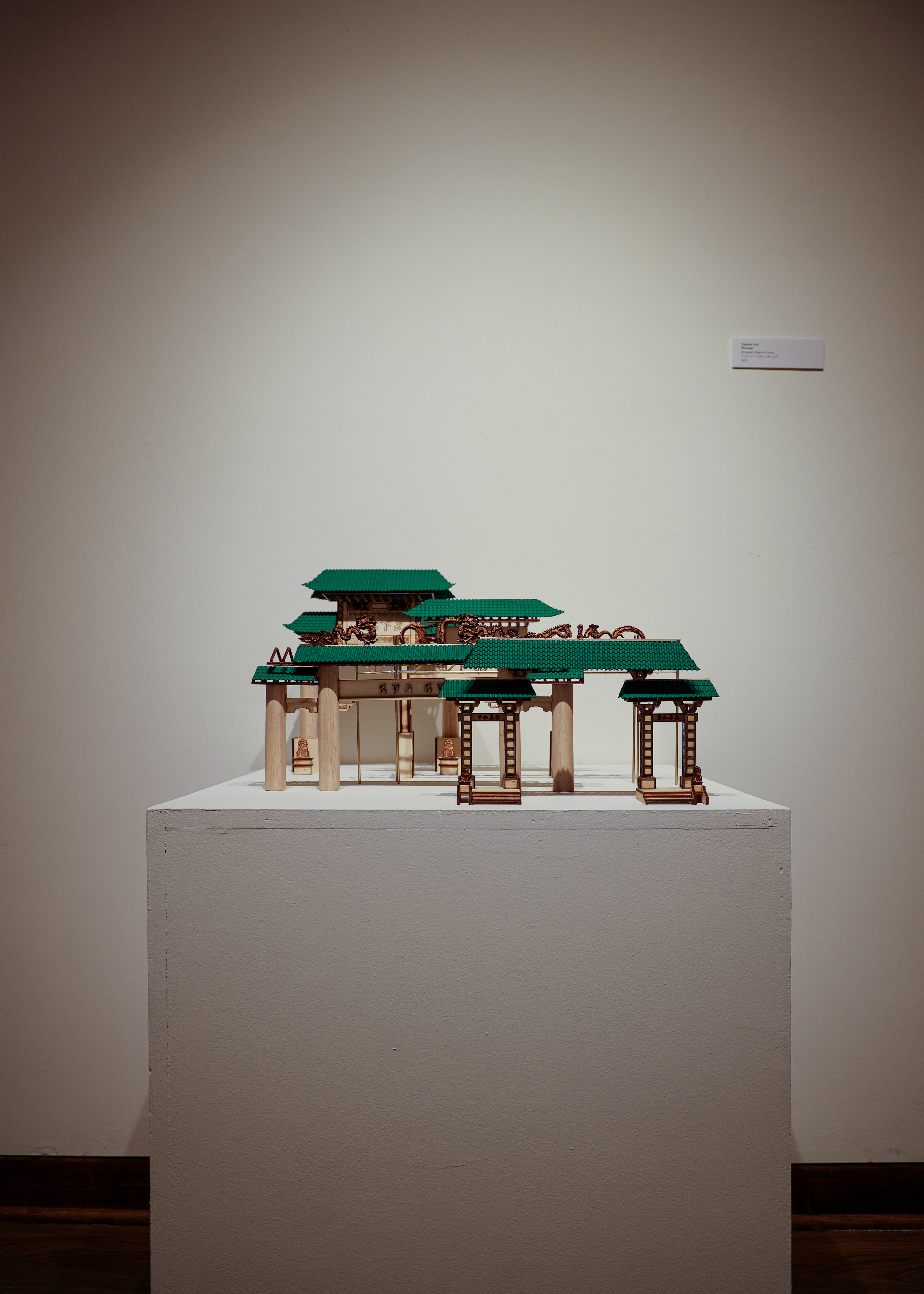

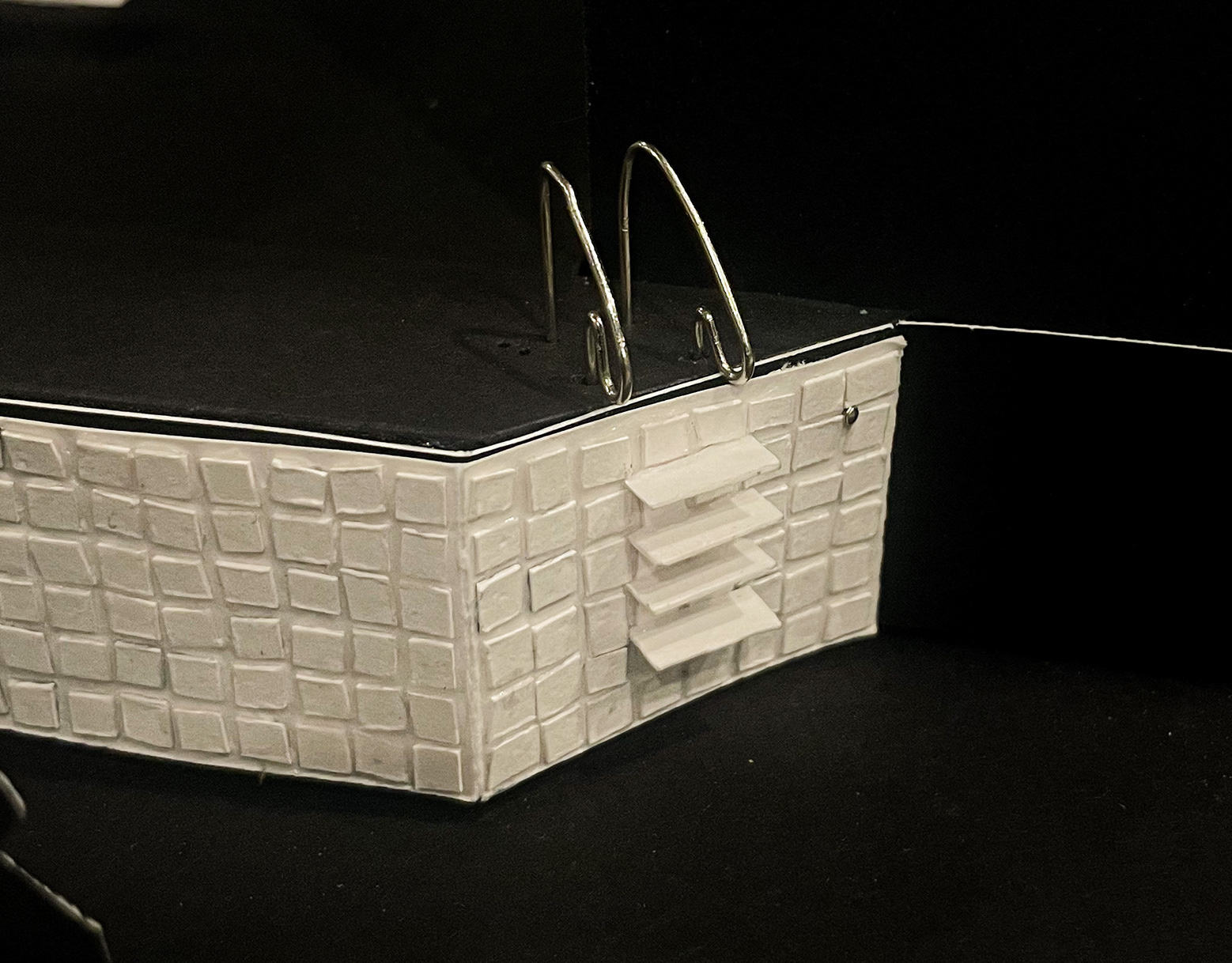
The form (¼” scale model, standard to theatrical model making) and placement (first in the three-part series) of Welcome are inspired by the parallels between the invented tradition of Chinatown welcome gates and the proscenium in Western theatre. Both contain, frame, and serve as a portal between fact and fiction. In a somewhat counterintuitive way, however, curiosity towards the origin, utility, and significance of the gates is generated via their estrangement from their roles as borders and thresholds. Extracted from their urban contexts and placed next to one another, the models, like the páifāng/páilóu architectural tradition that inspired Chinatown welcome gates, are once again vernacular — thereby drawing the viewer’s attention towards their shared as well as idiosyncratic attributes, rather than their their contextual visual difference. Furthermore, in the absence of anything under or behind them, the models provoke a curiosity towards and contemplation of the gates they are derived from: how they came to be, who and what they contain/frame/portal, and why they are so aesthetically essential.
More in Visual Design