“The narrative is mediated through the imperial language, refusing the myth of a direct, unmediated narrative experience”
Nayoung Aimee Kwon, "Intimate Empire: Collaboration and Colonial Modernity in Korea and Japan"
Nearly 500 years ago, a storm brought a Portuguese trading ship to Japan.
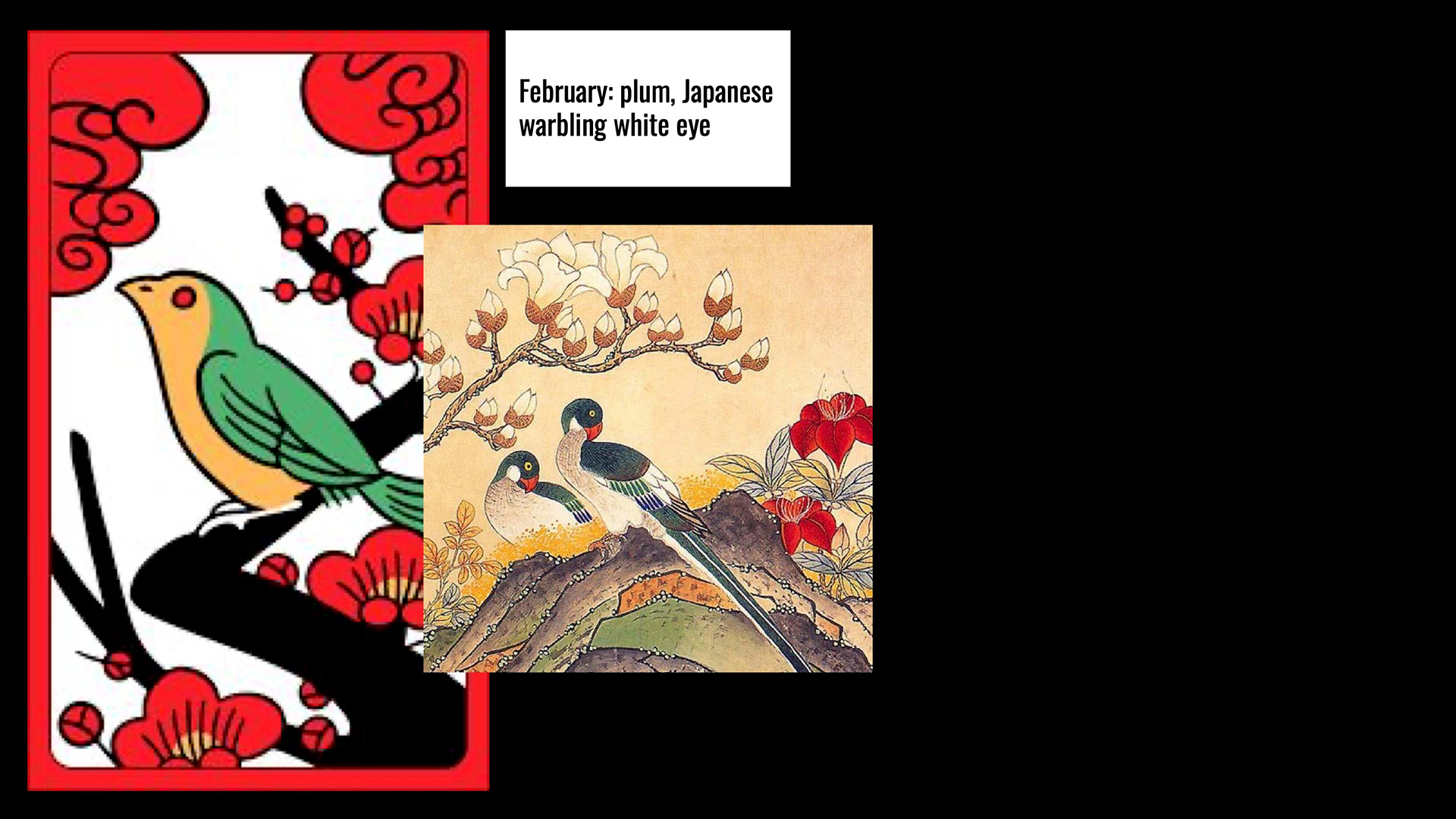
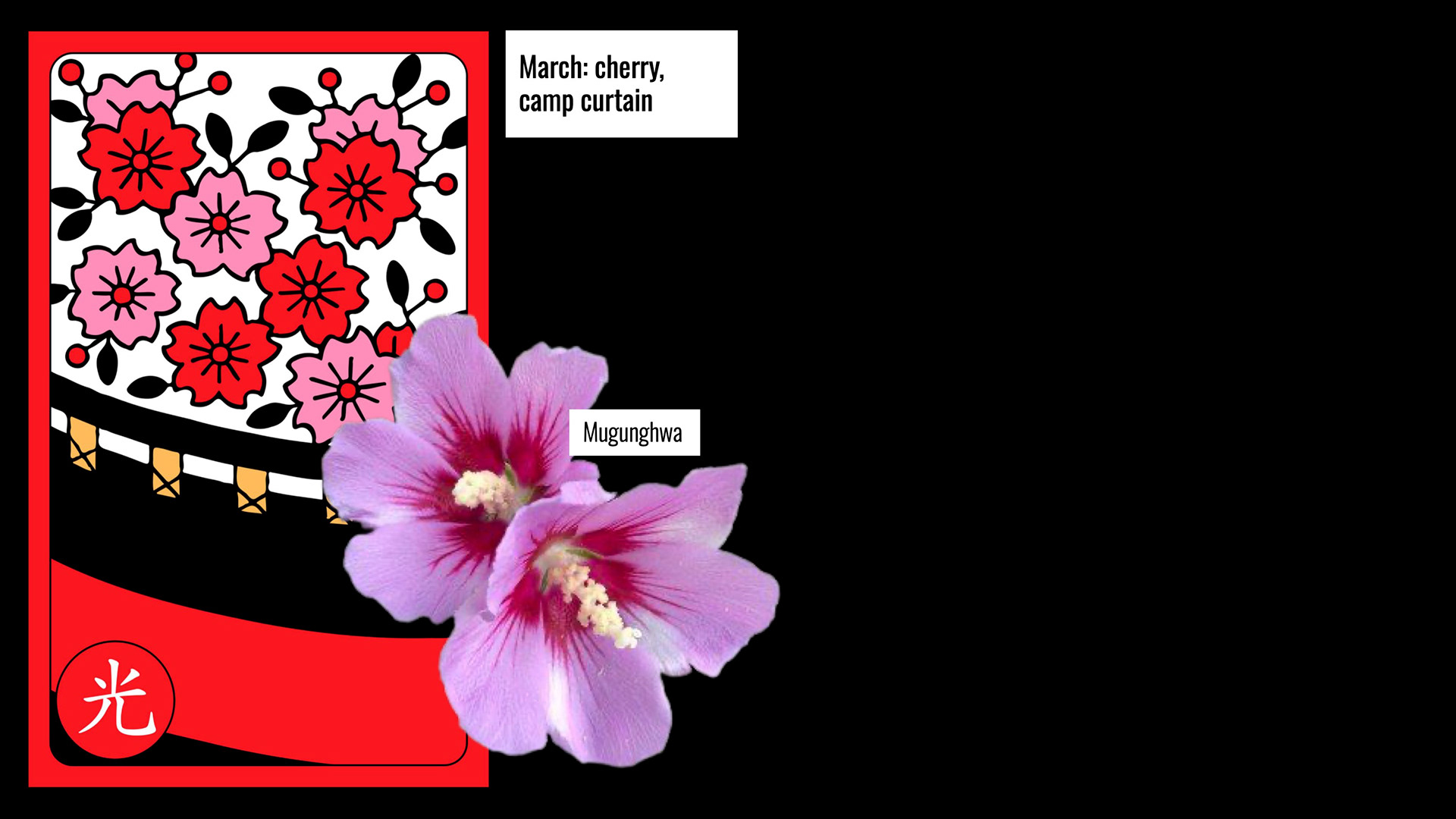
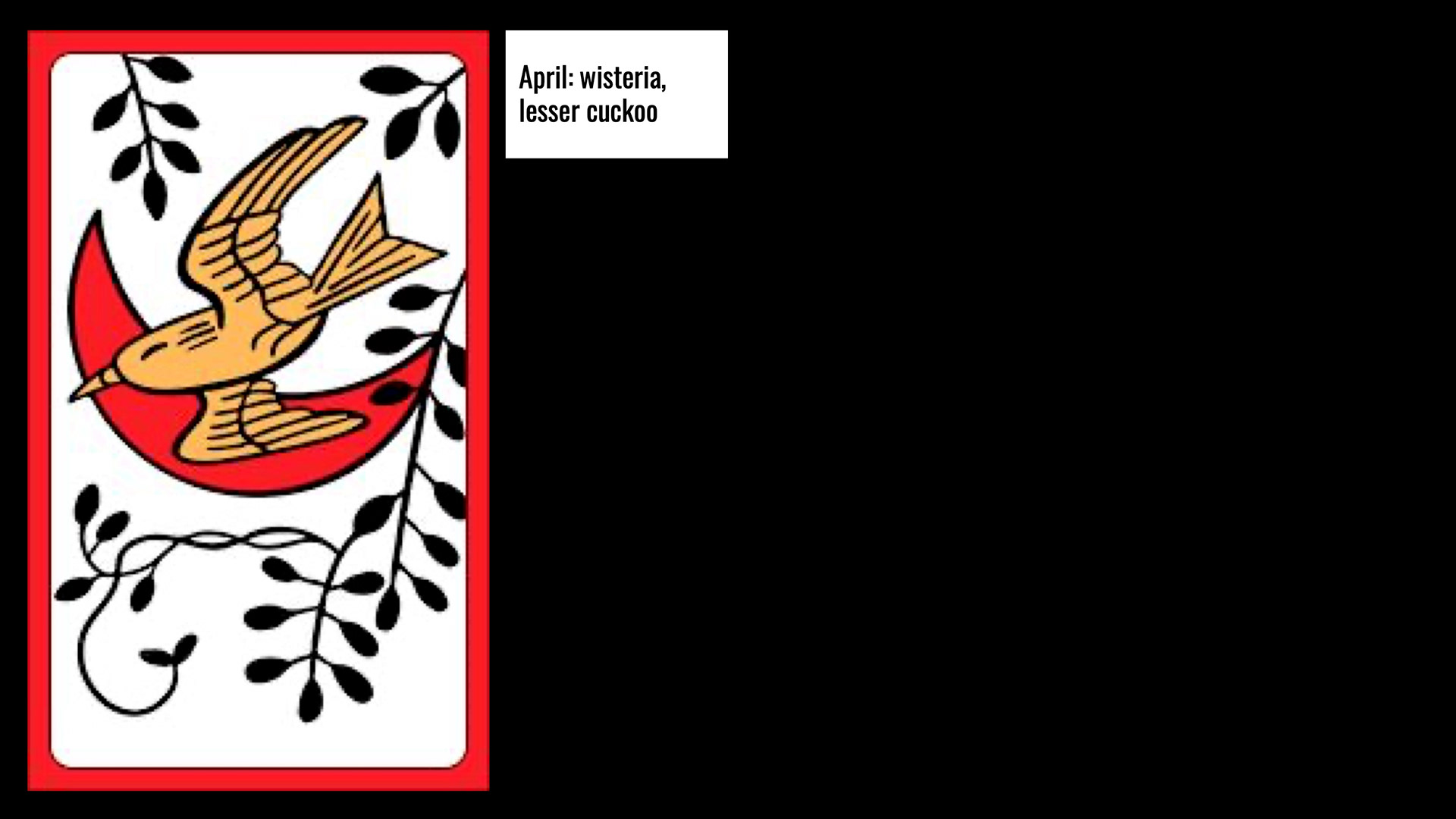
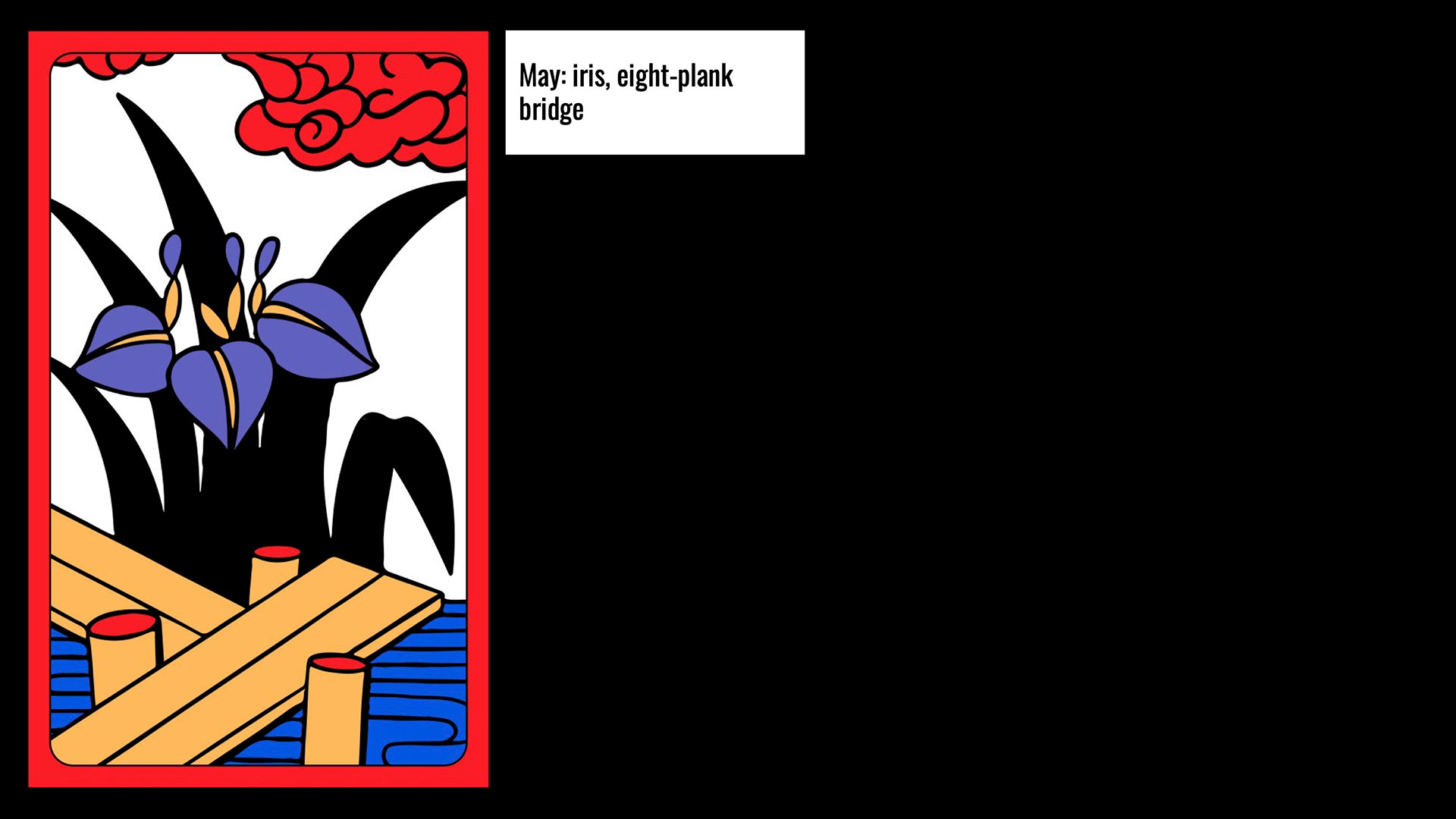
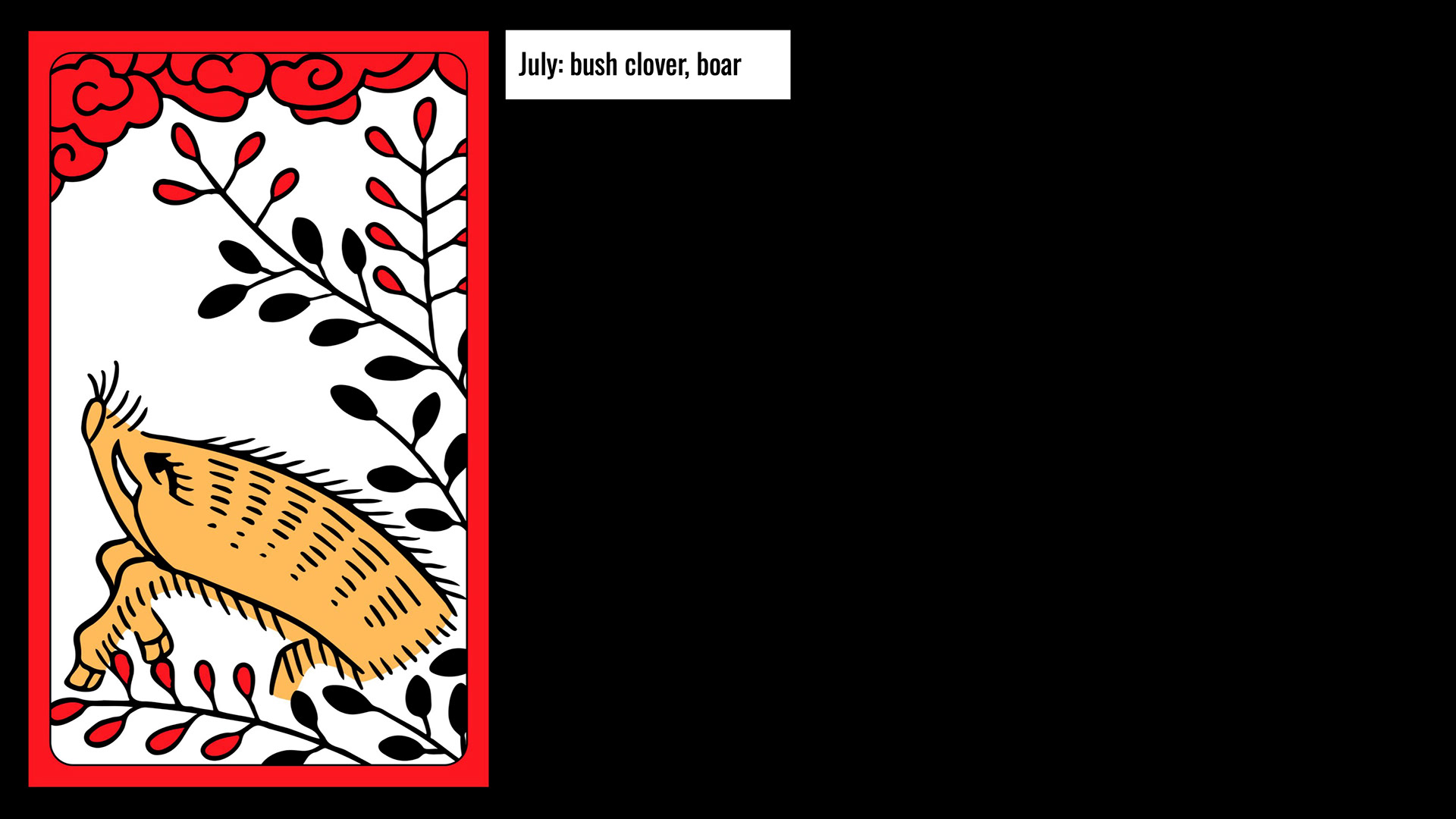
On that ship were several sailors, who brought with them a portion of a deck of tarot cards, popular in several parts of Europe during the time. Gambling with these foreign cards became so rapidly and widely popularized across the island upon introduction that in the mid-1800s, the Japanese government banned both the object and the activity – prompting the creation of a new deck of cards. Whereas Europe’s tarot cards have a self-evident design – their values illustrated and written across a rather large surface area – Japan’s hanafuda (花札) cards are small and have their values discreetly coded into illustrations of flowers, plants, animals, and cultural artifacts so as to evade suspicions of gambling.
In the late 19th century, these cards paralleled the expansion of Japan's empire and colonial rule and made their way to the Korean peninsula, where they became known as hwatu (화투) cards.
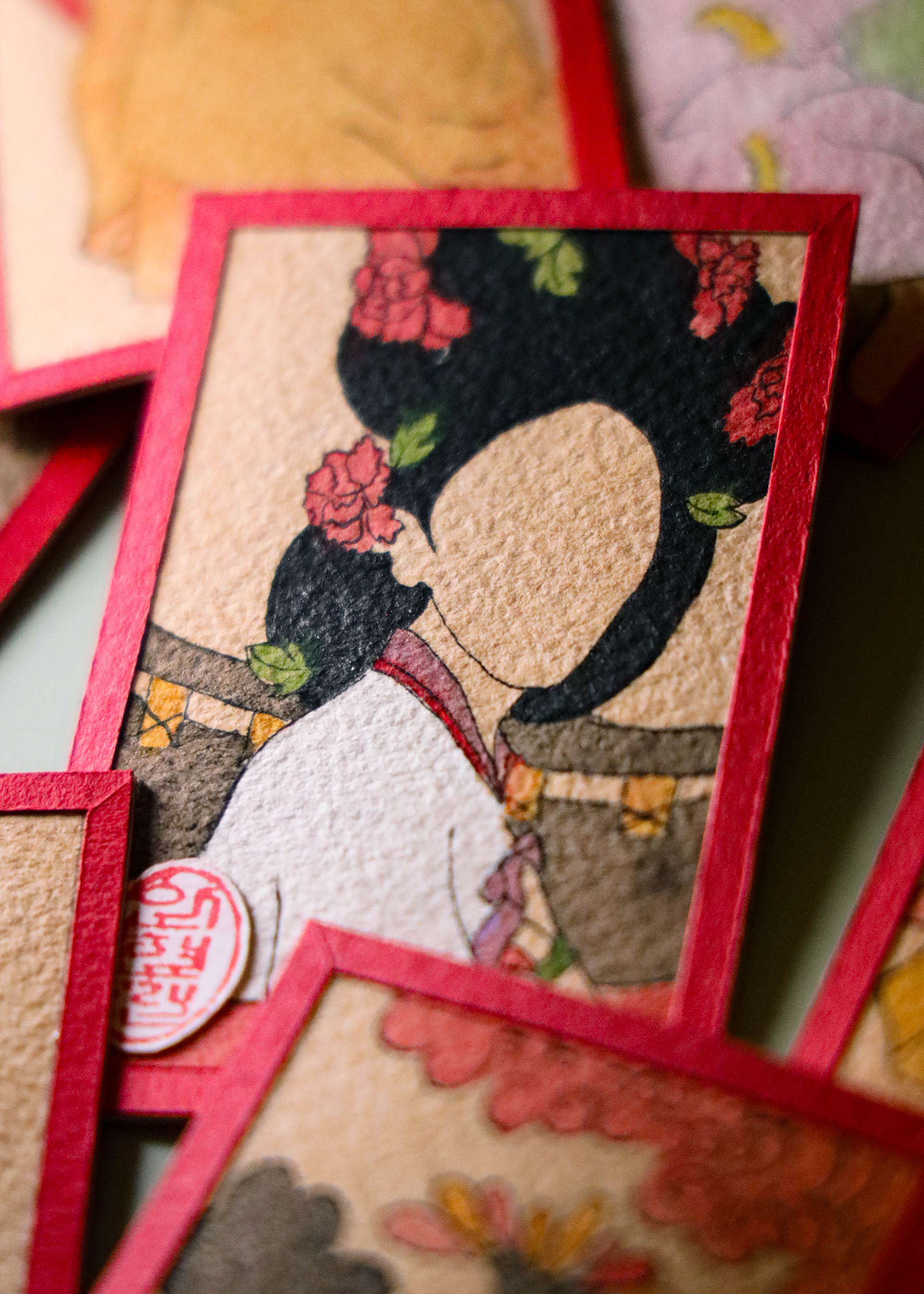
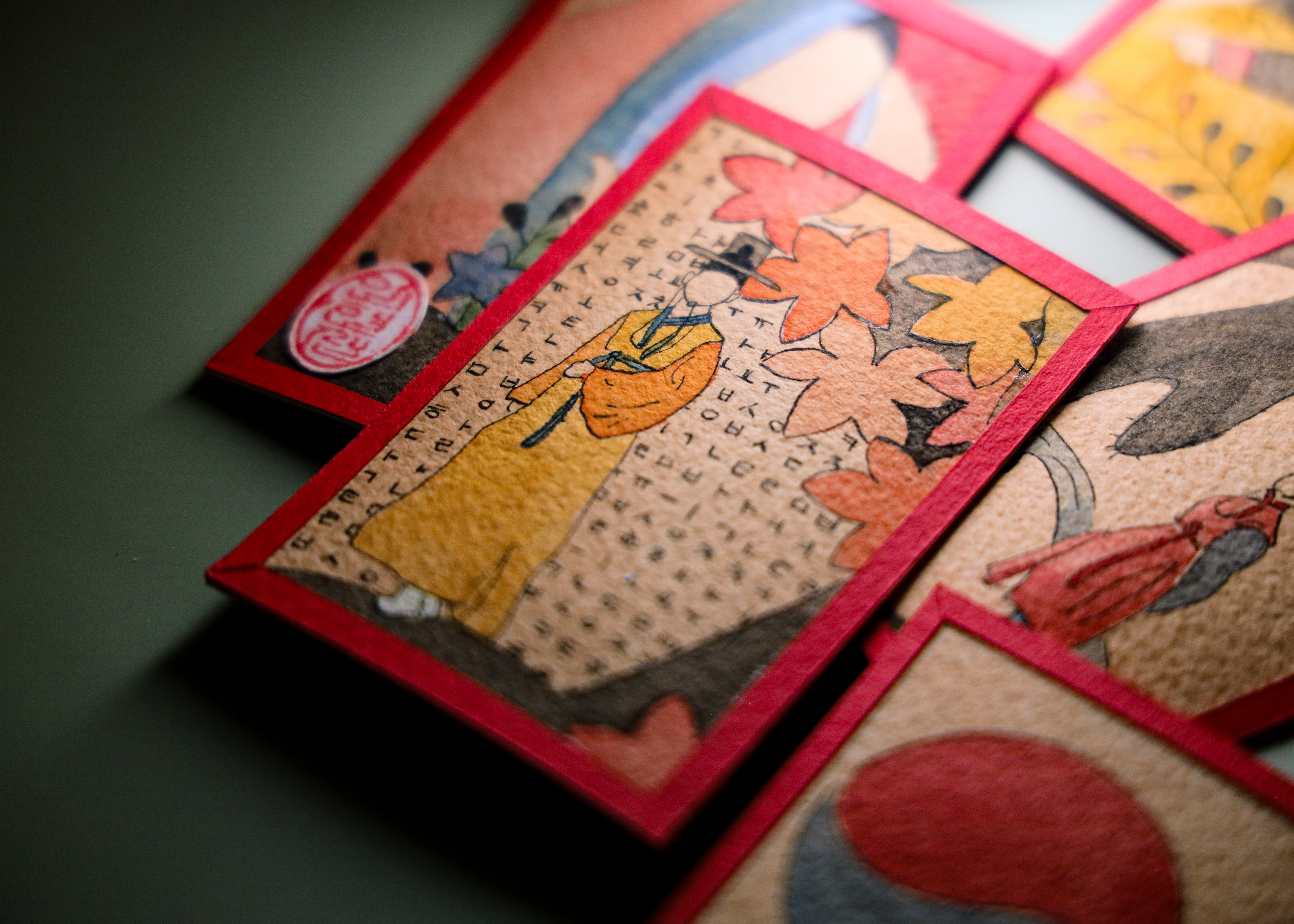
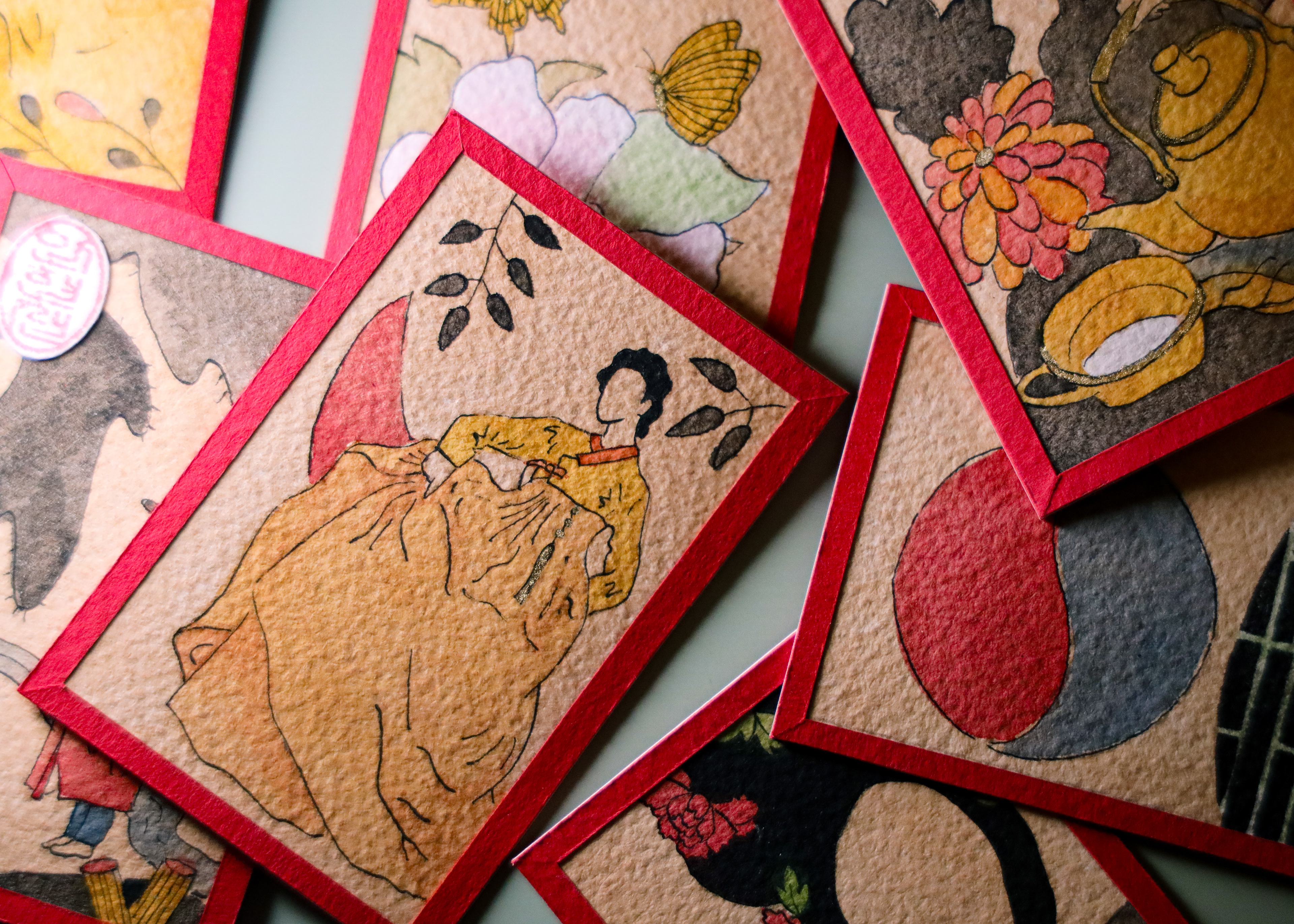
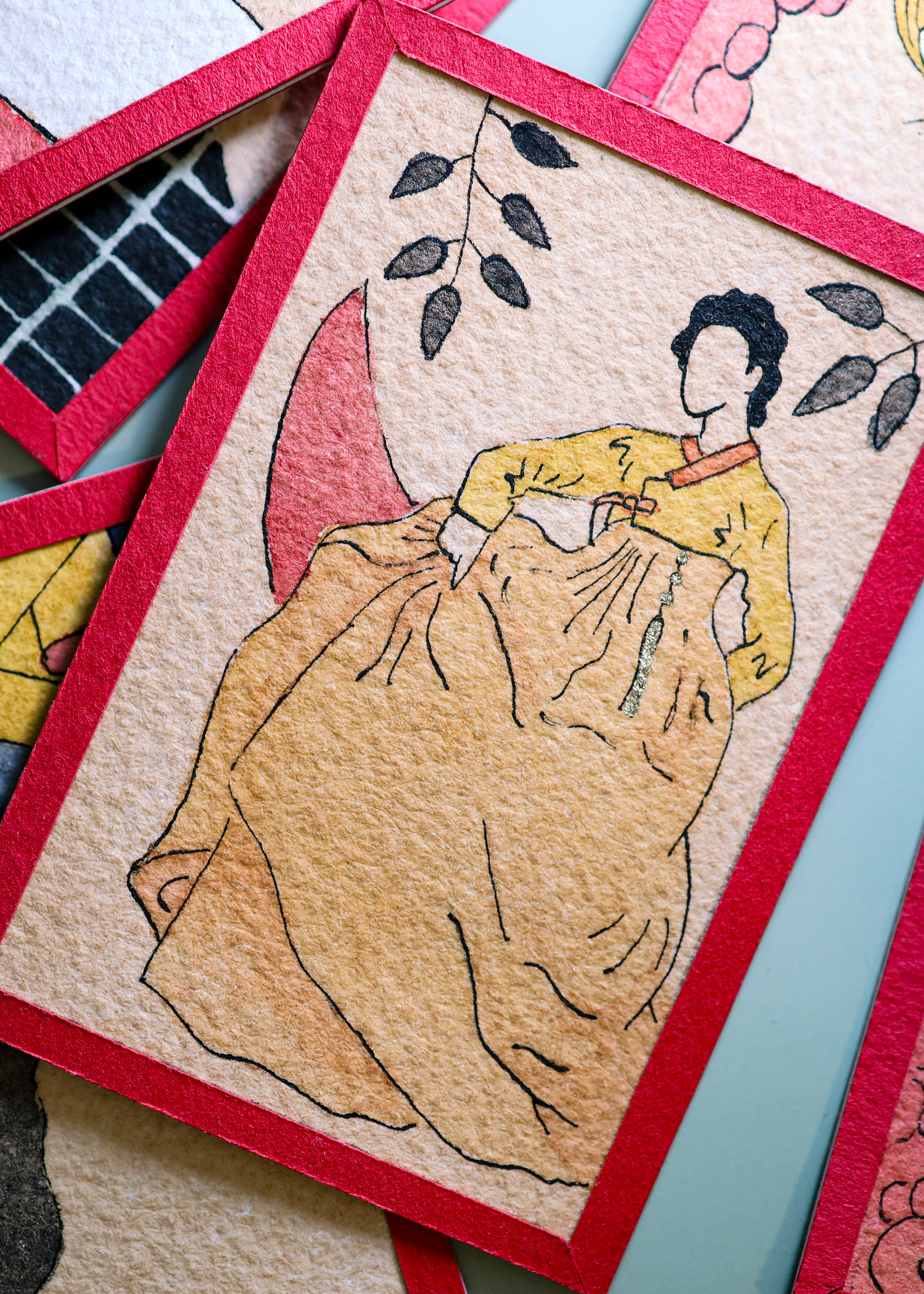
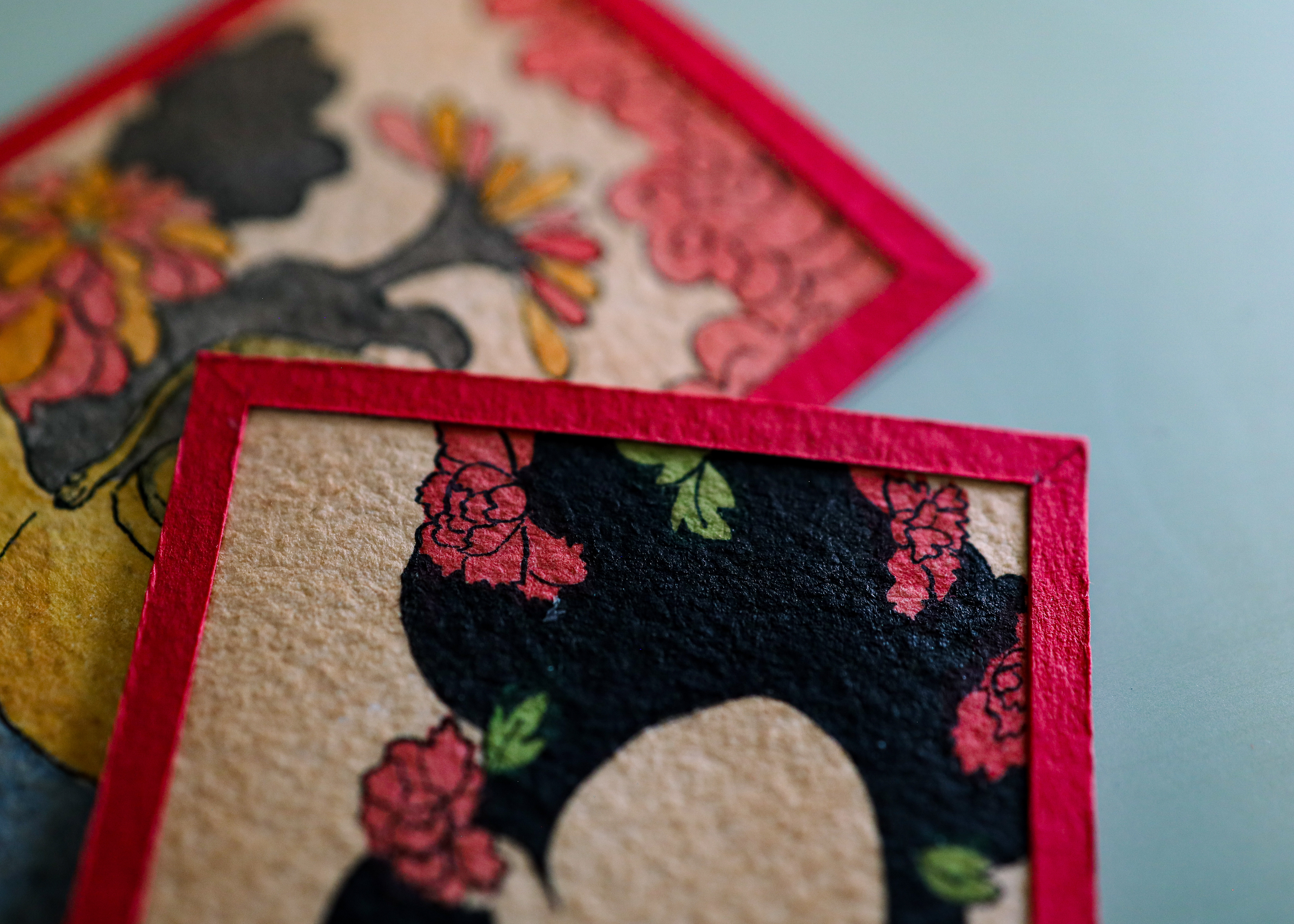
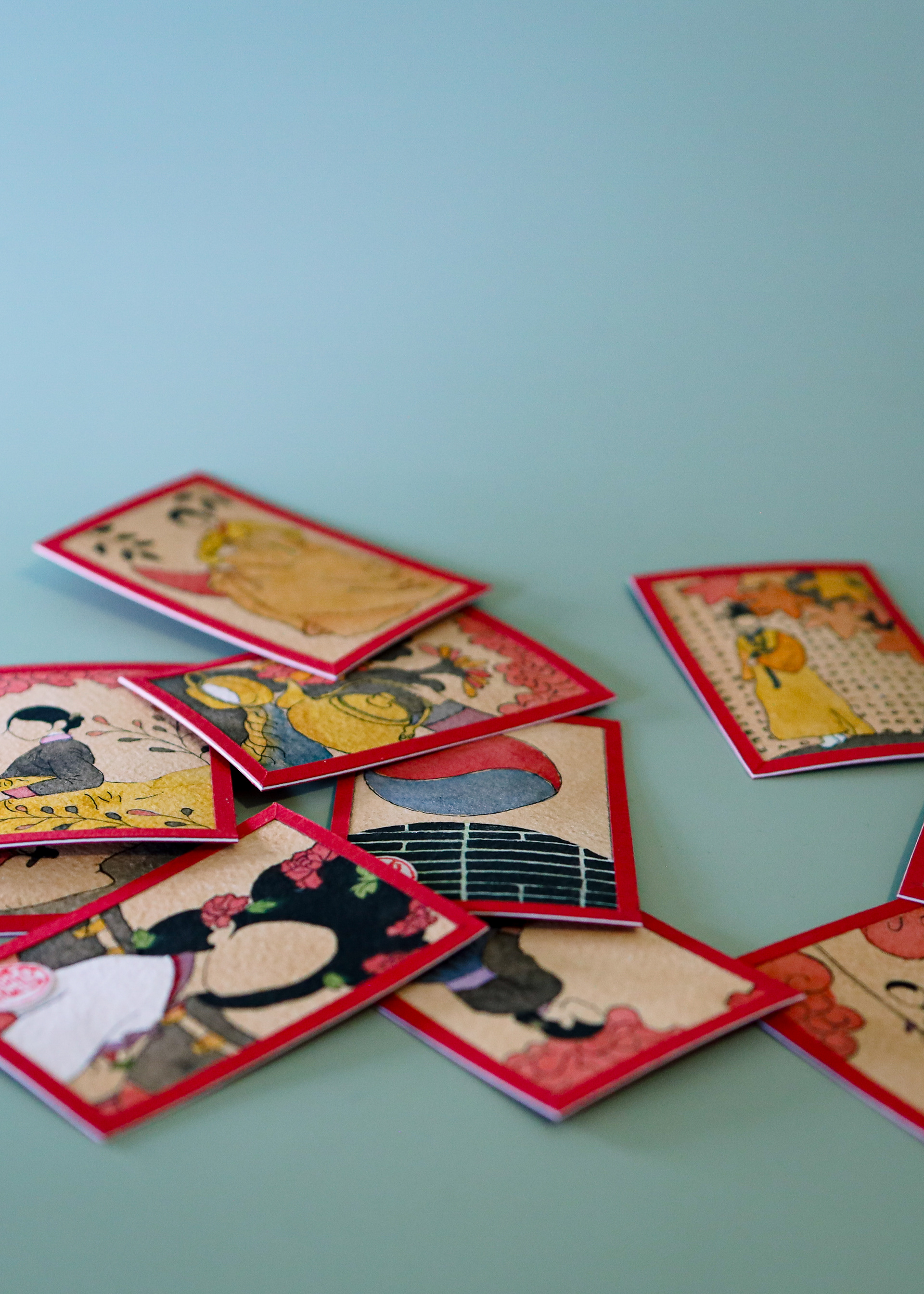
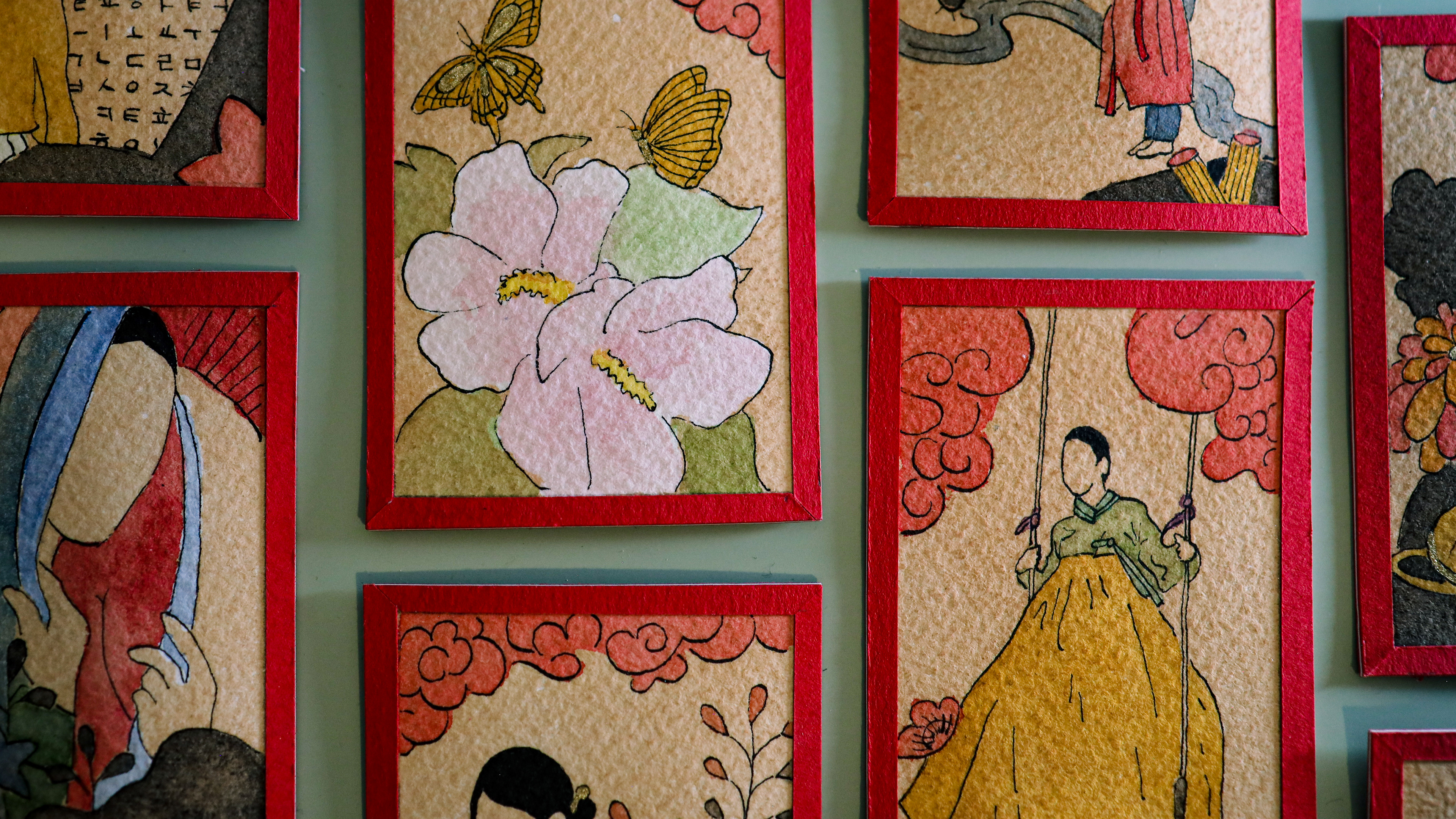
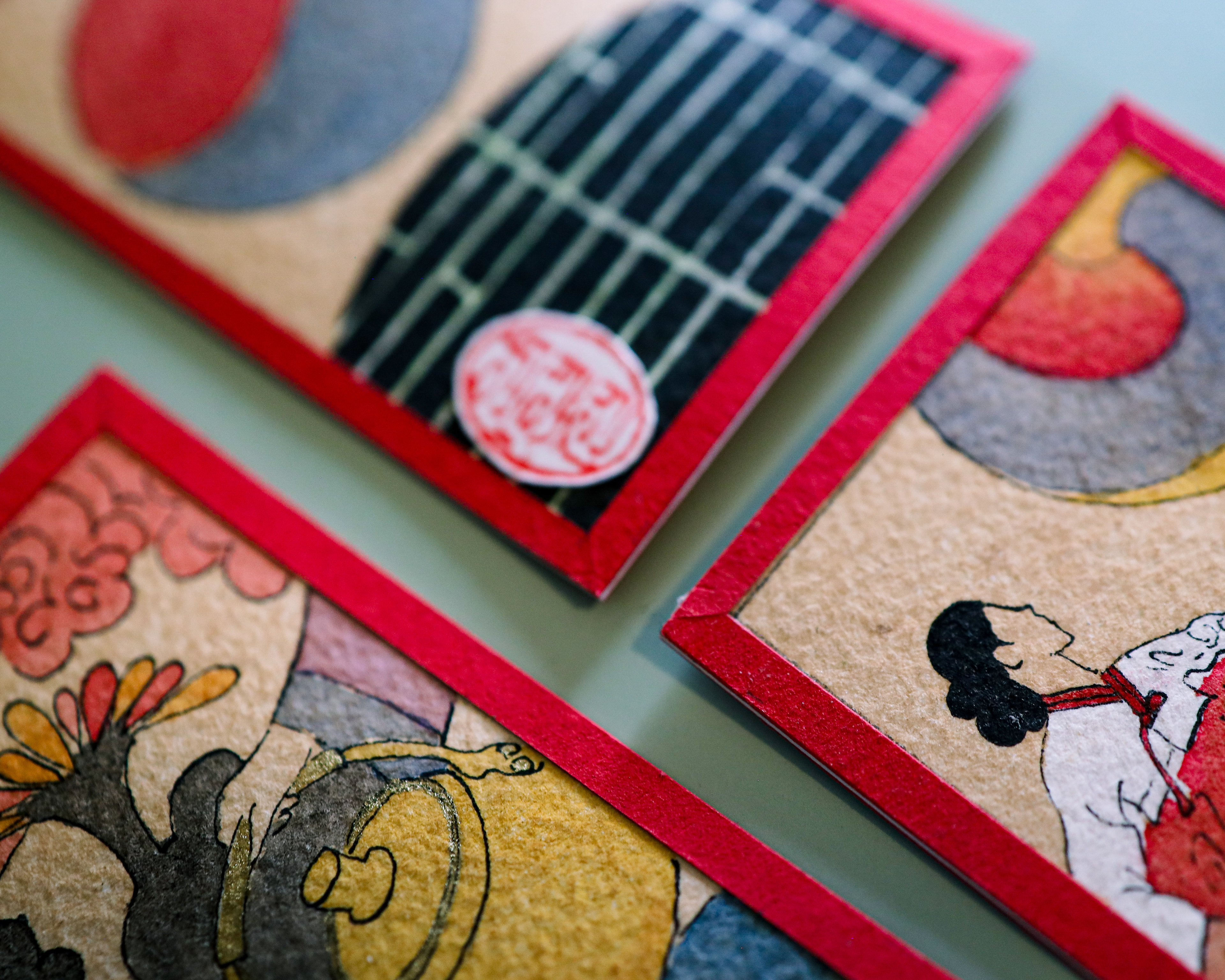
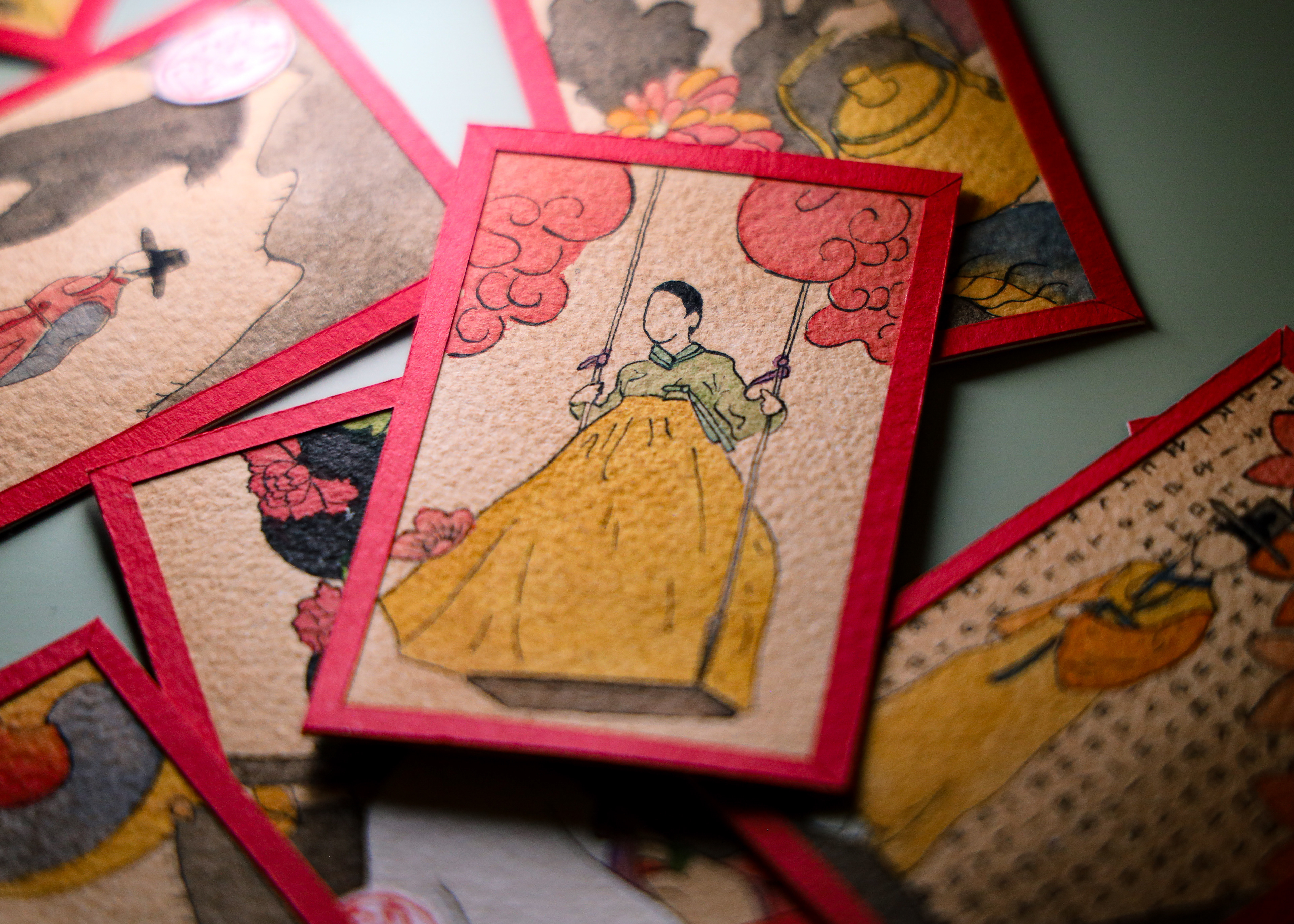
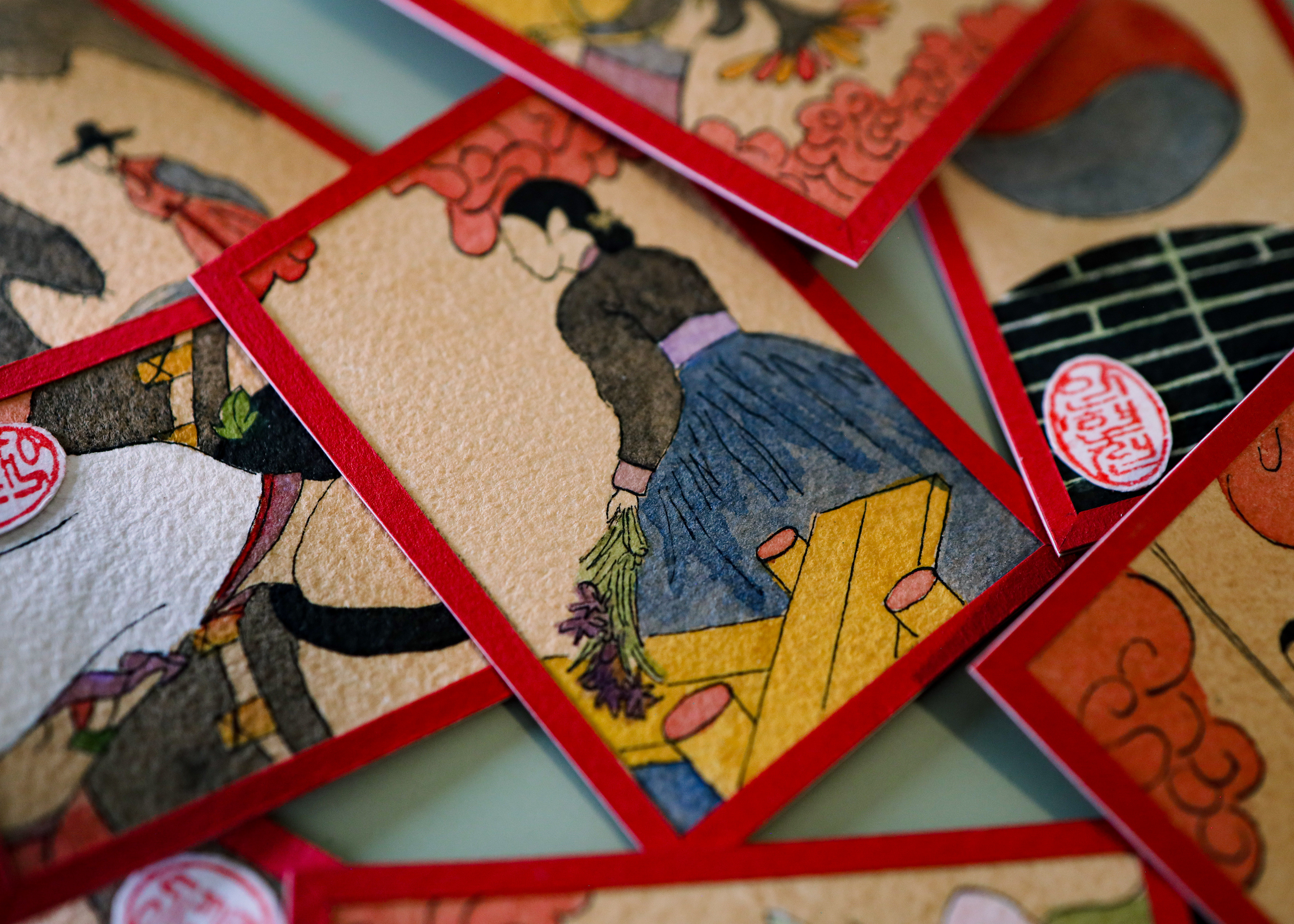
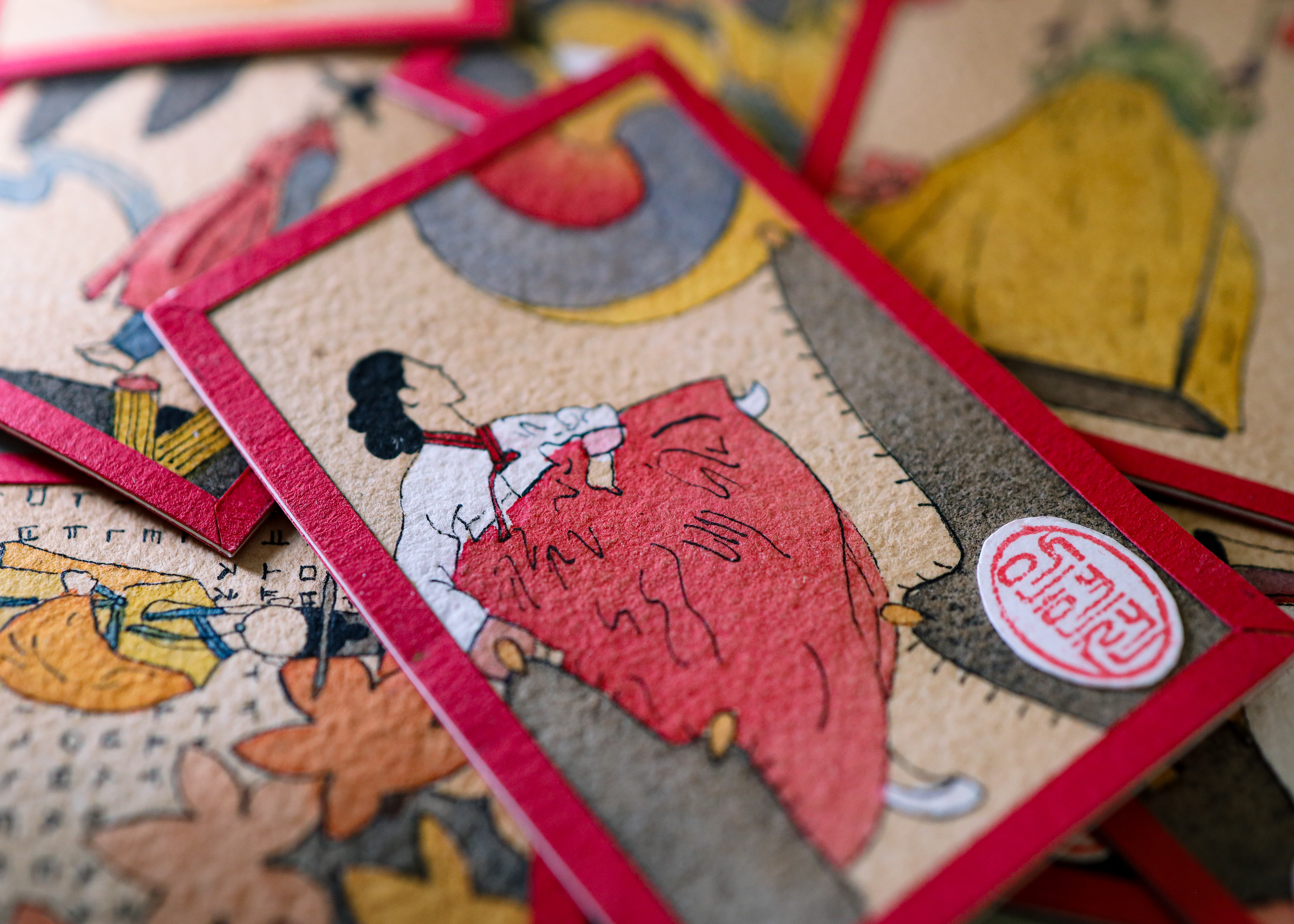
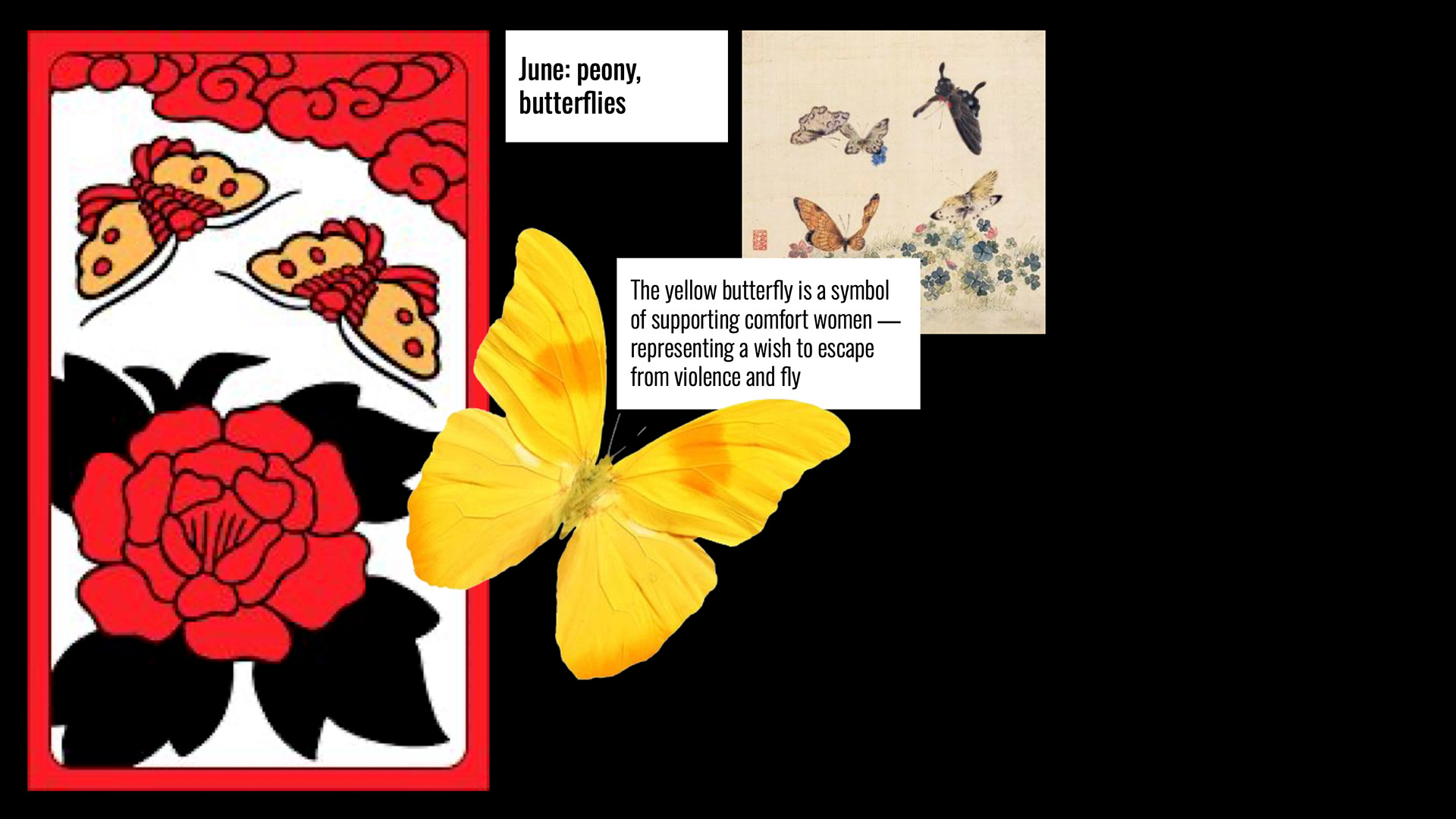
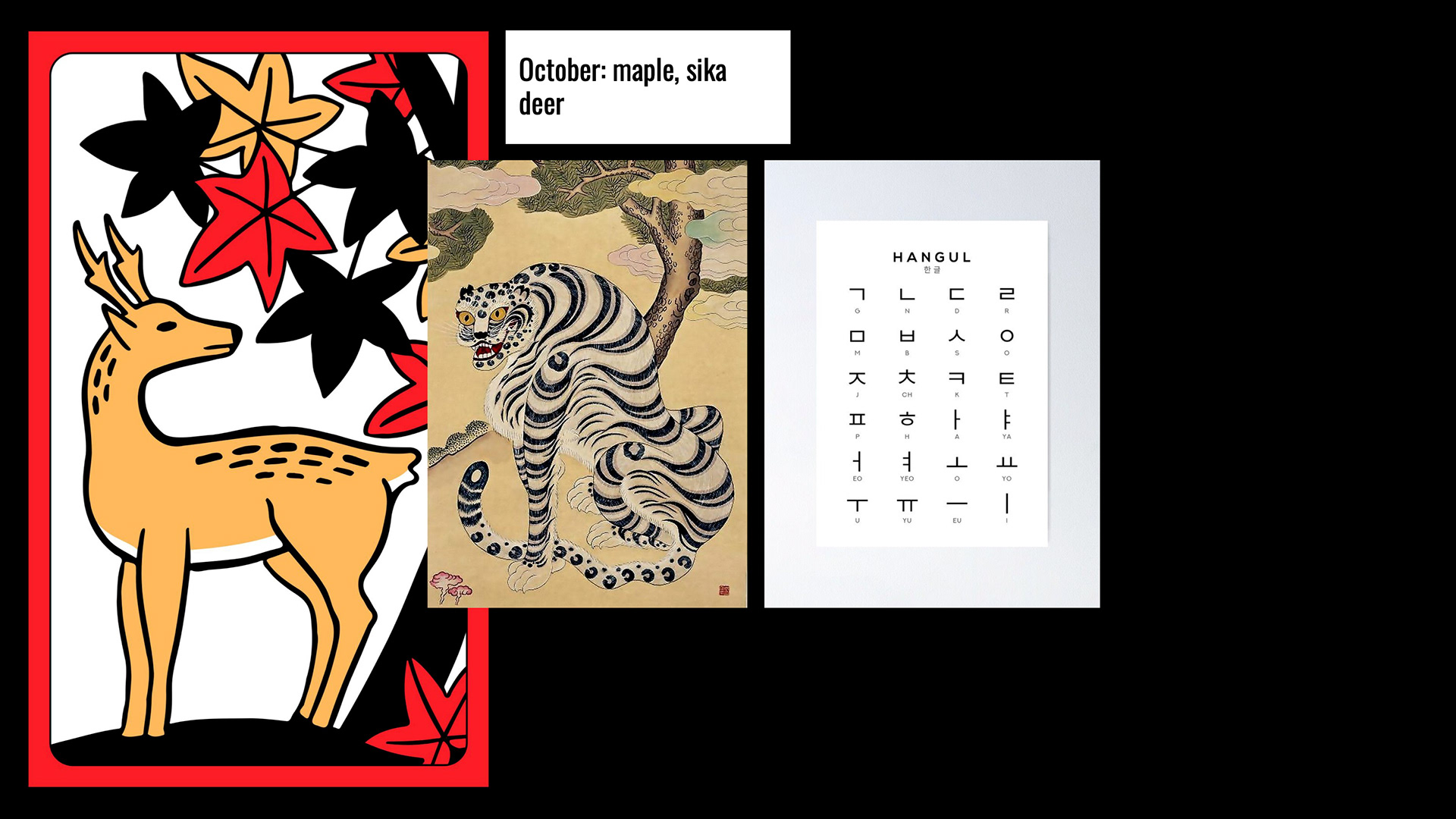
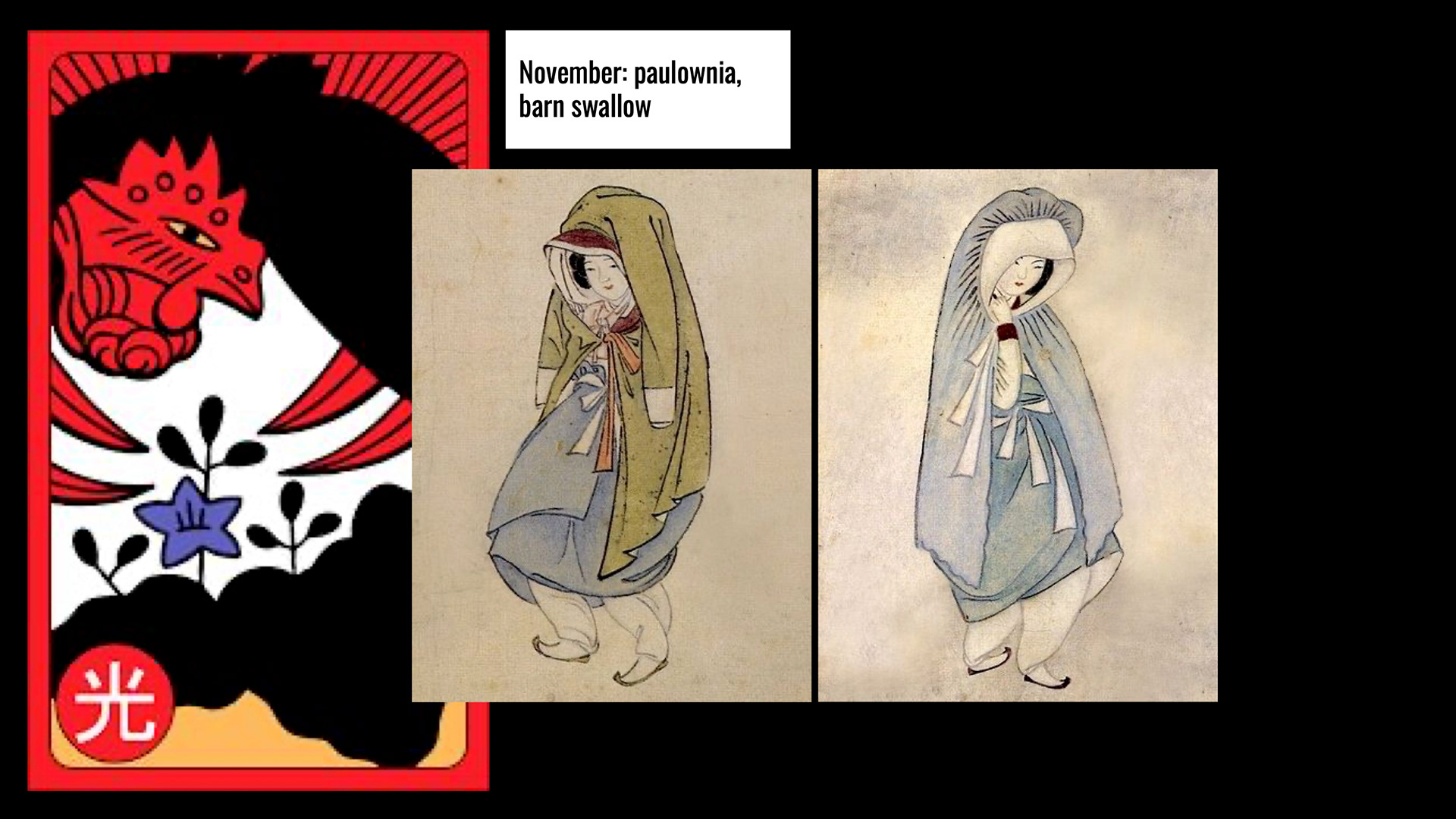
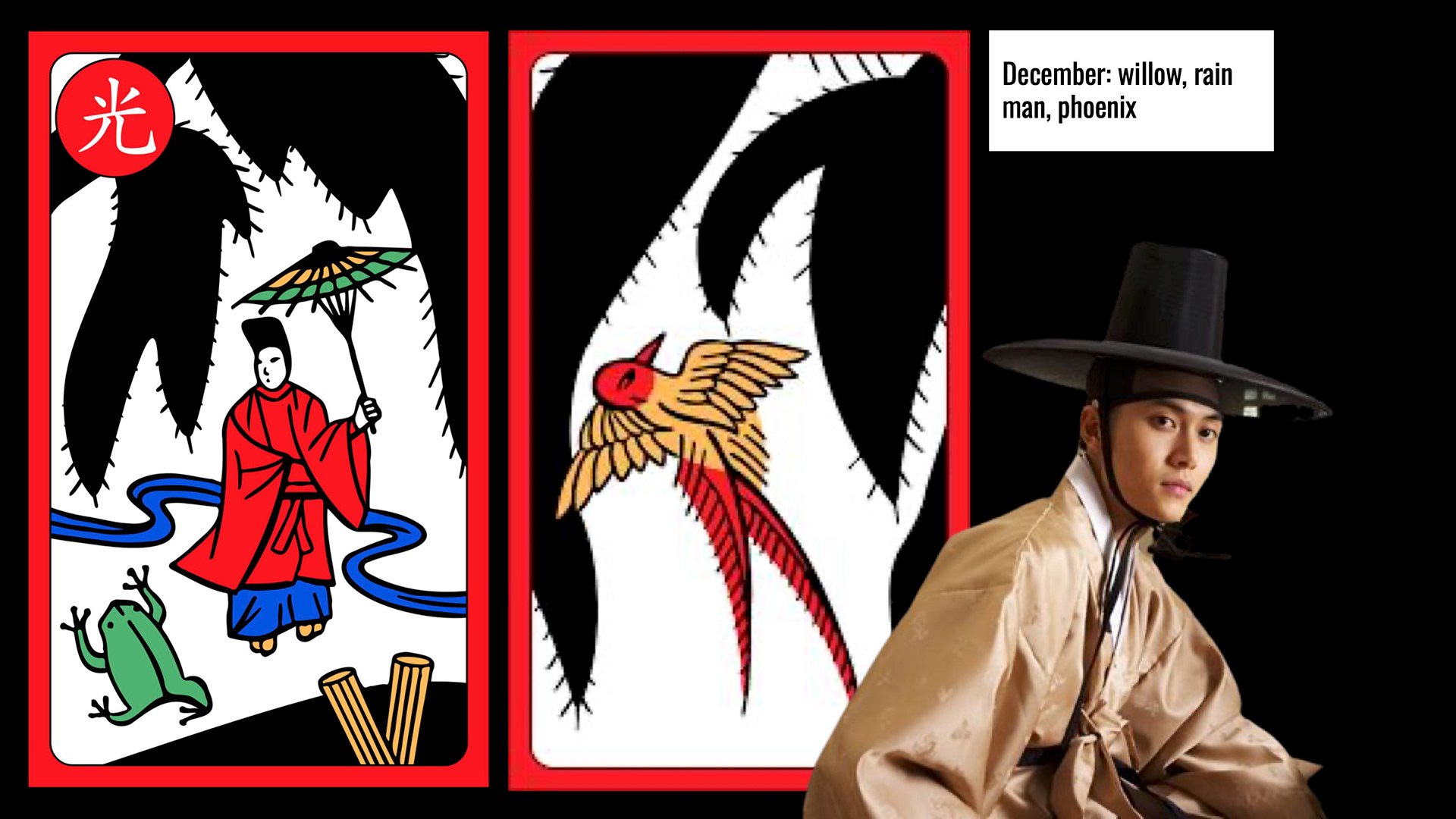
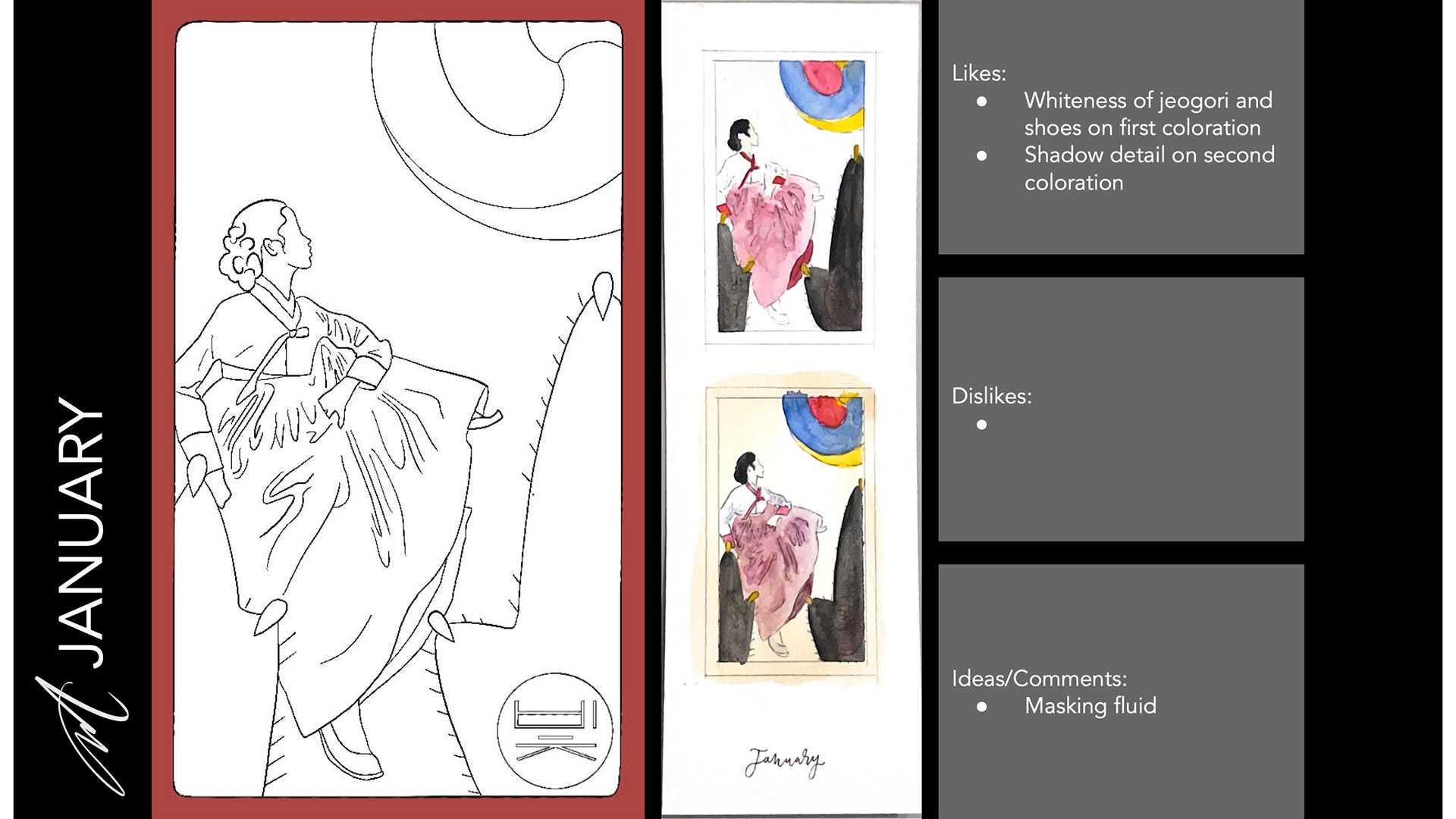
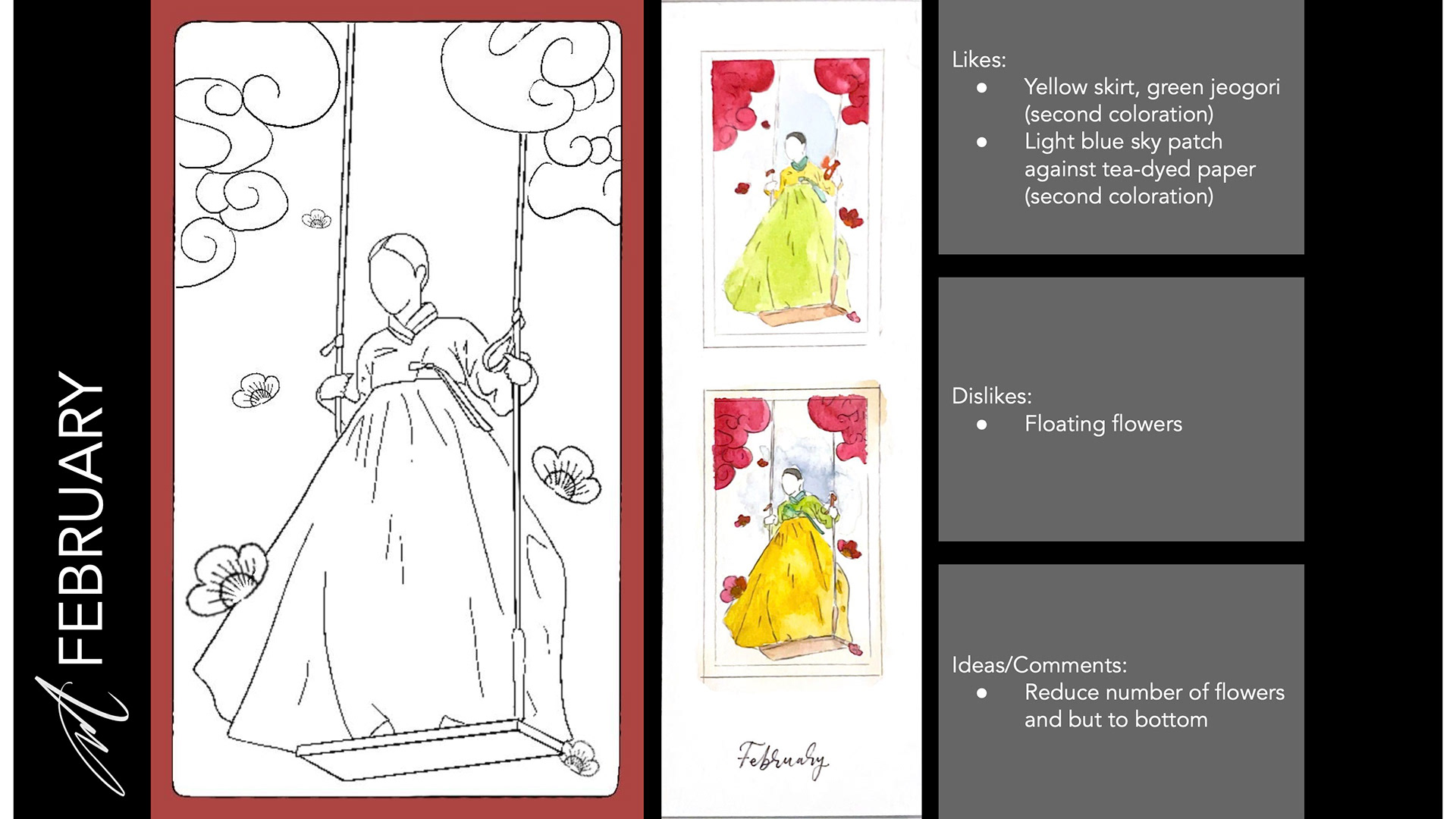
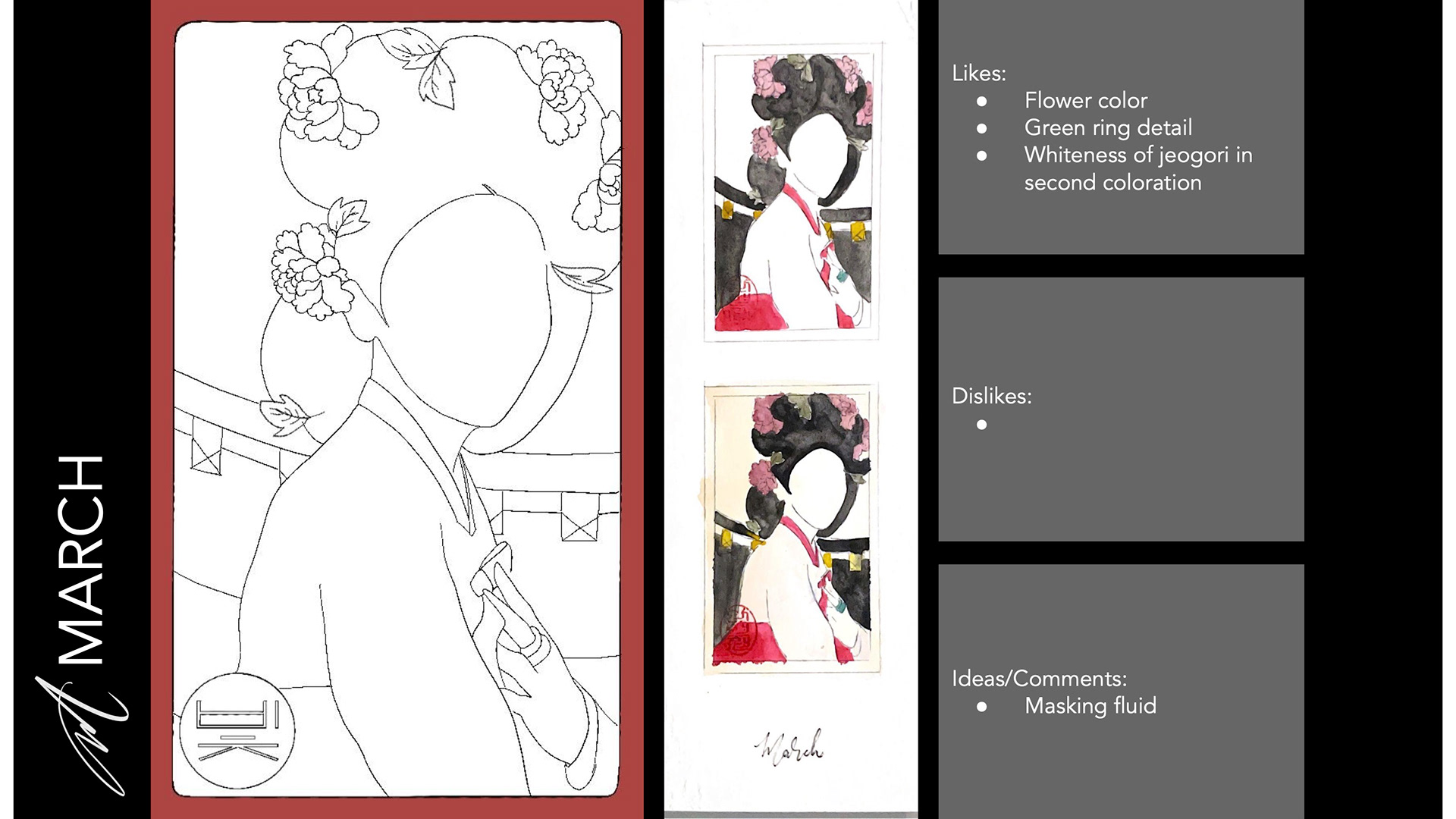
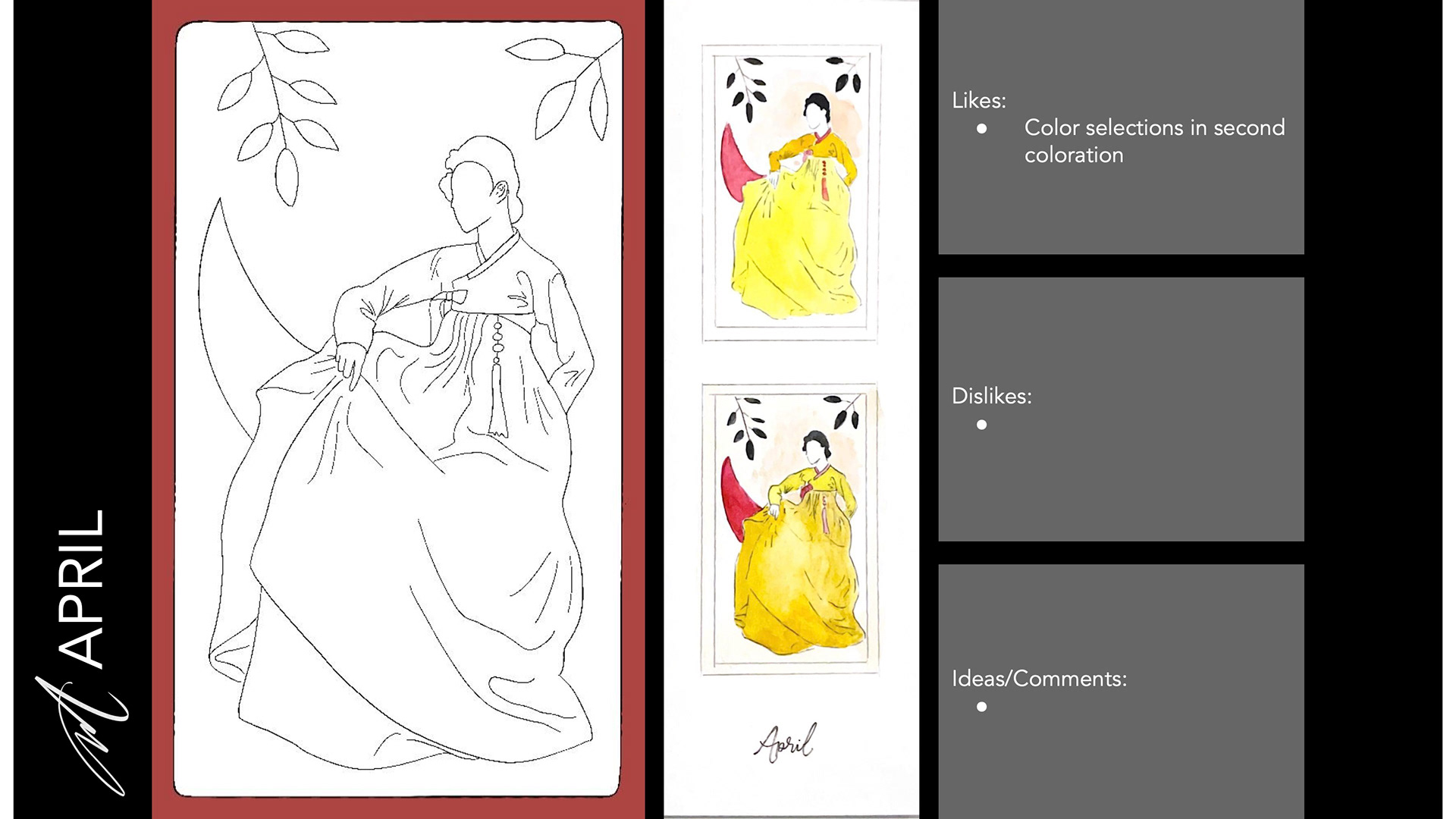
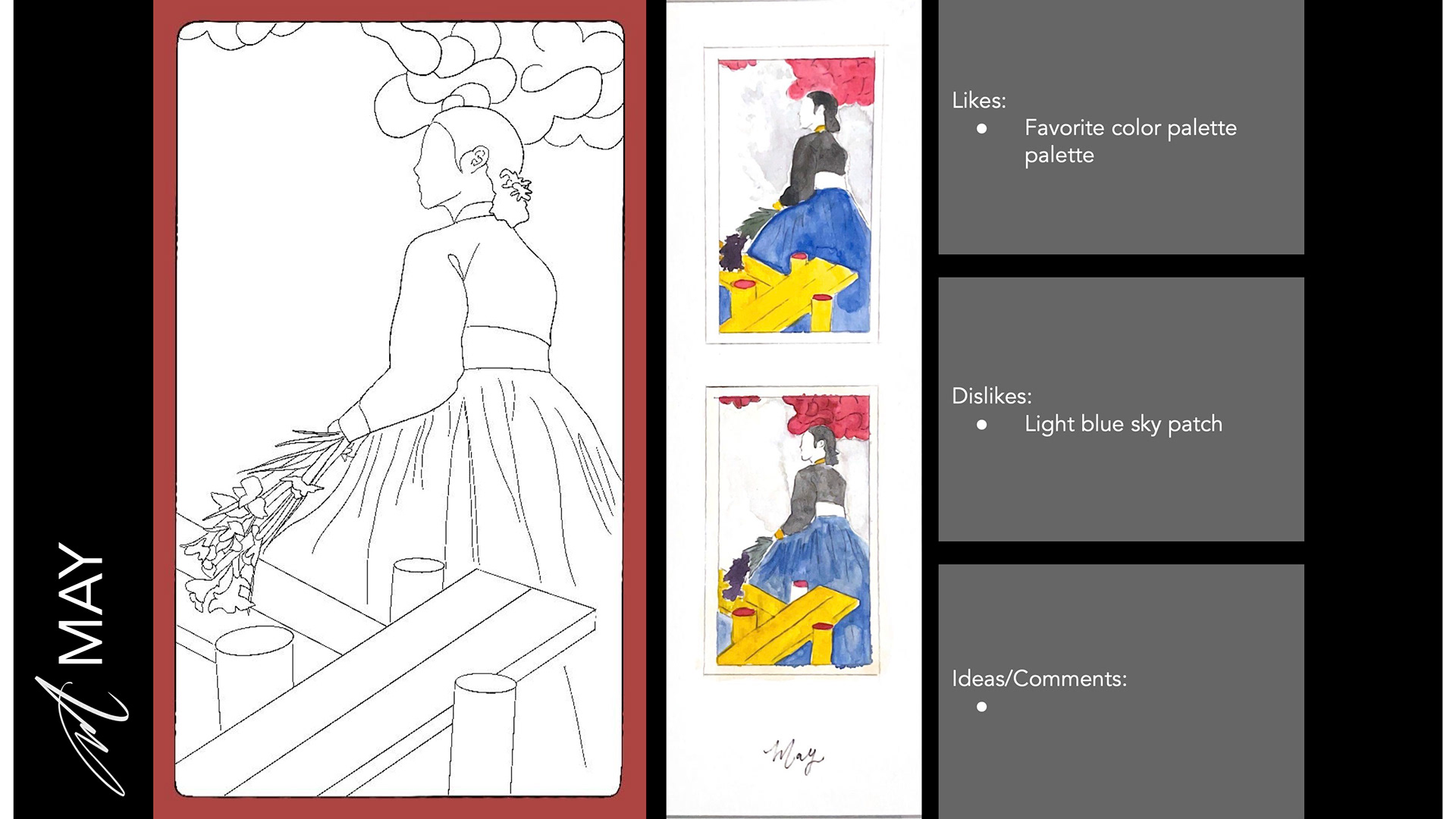
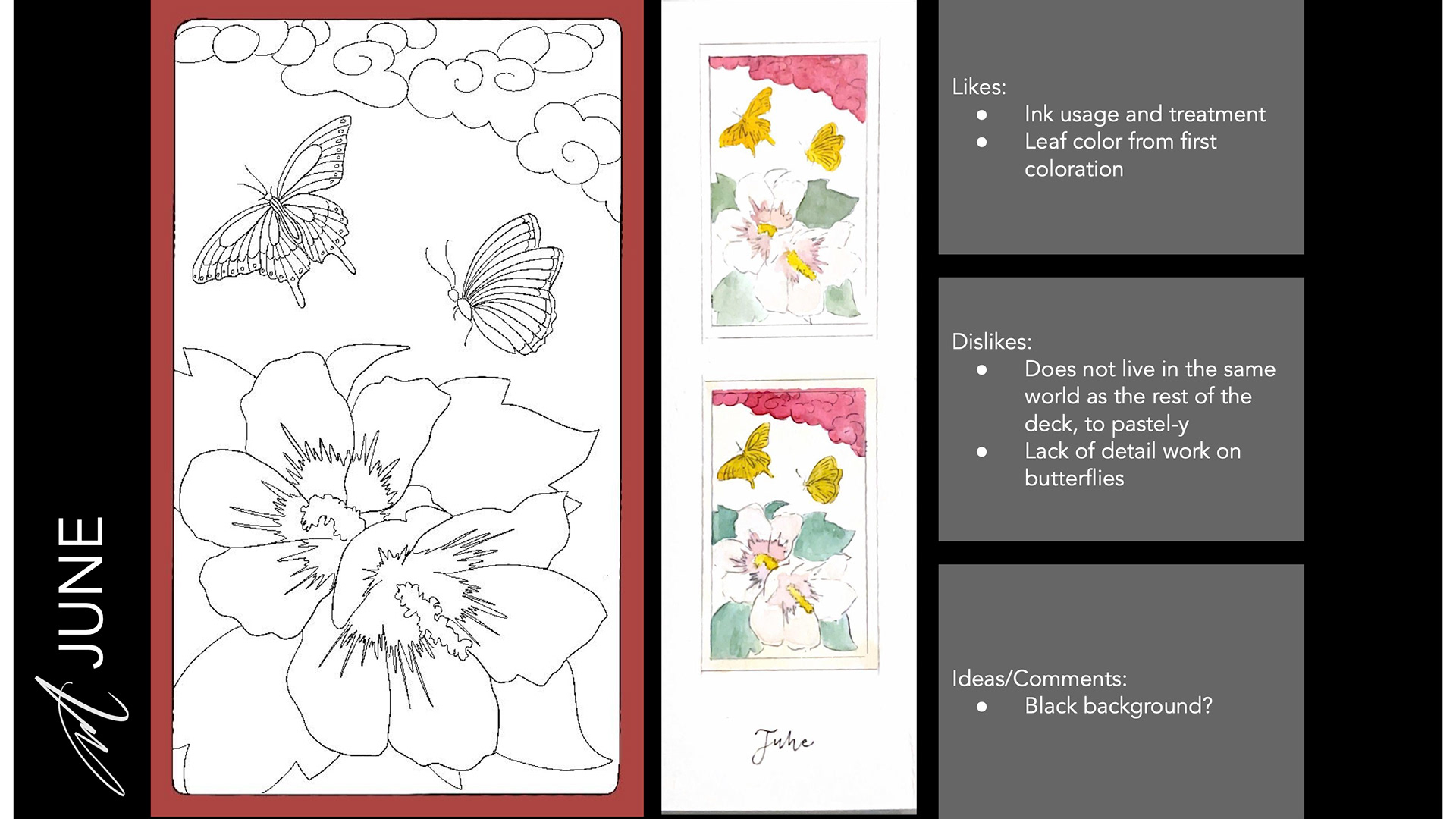
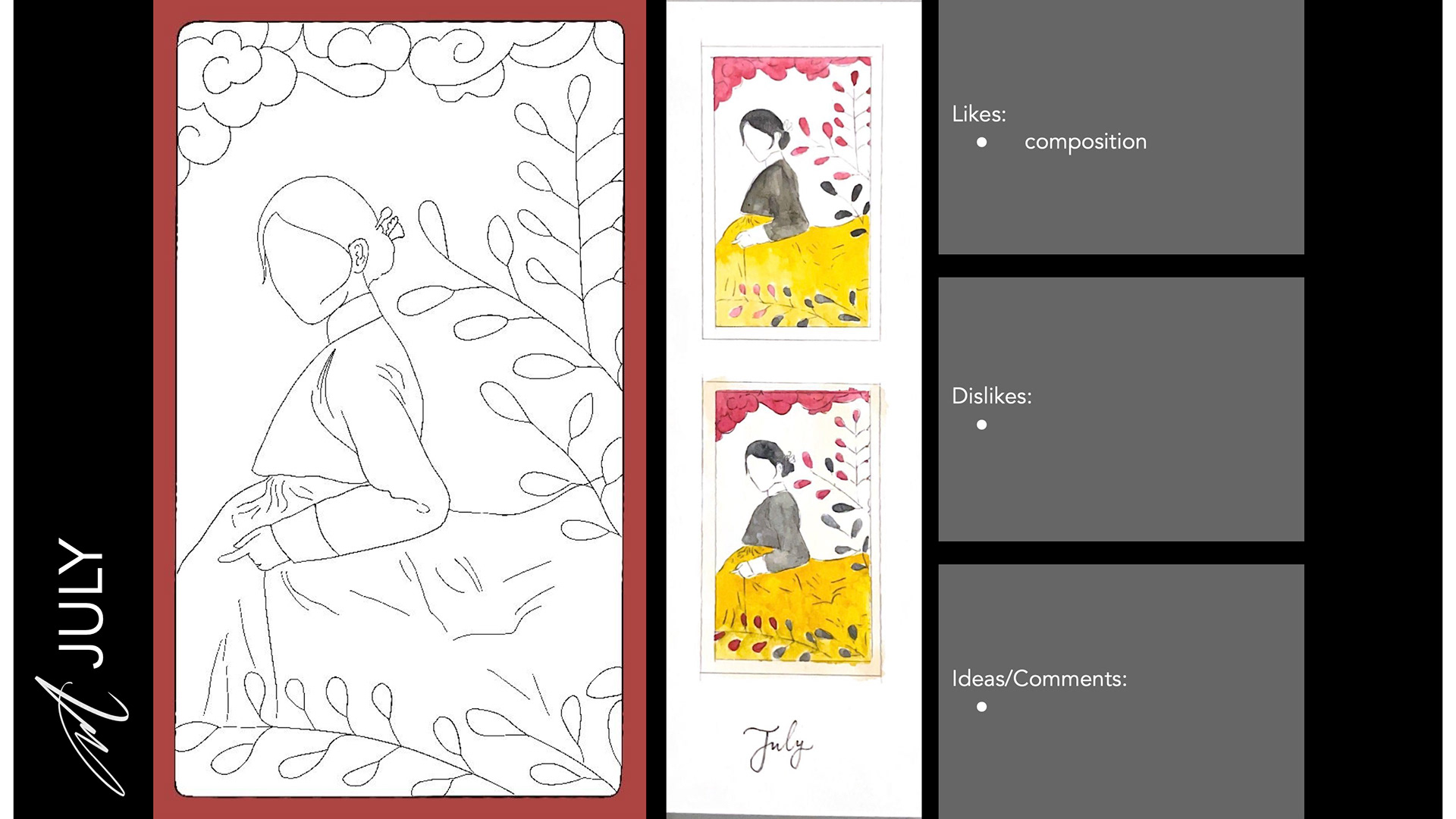
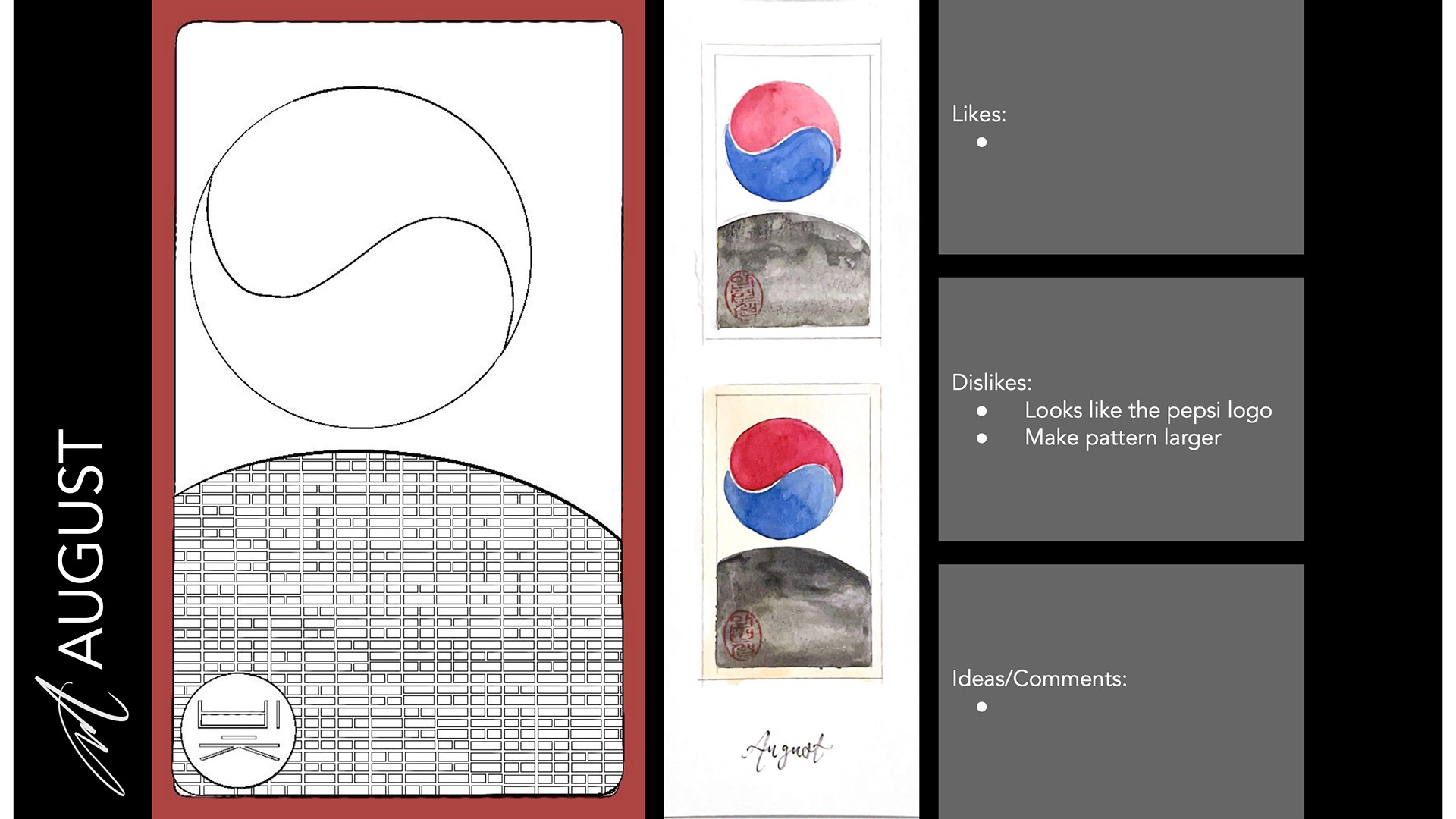
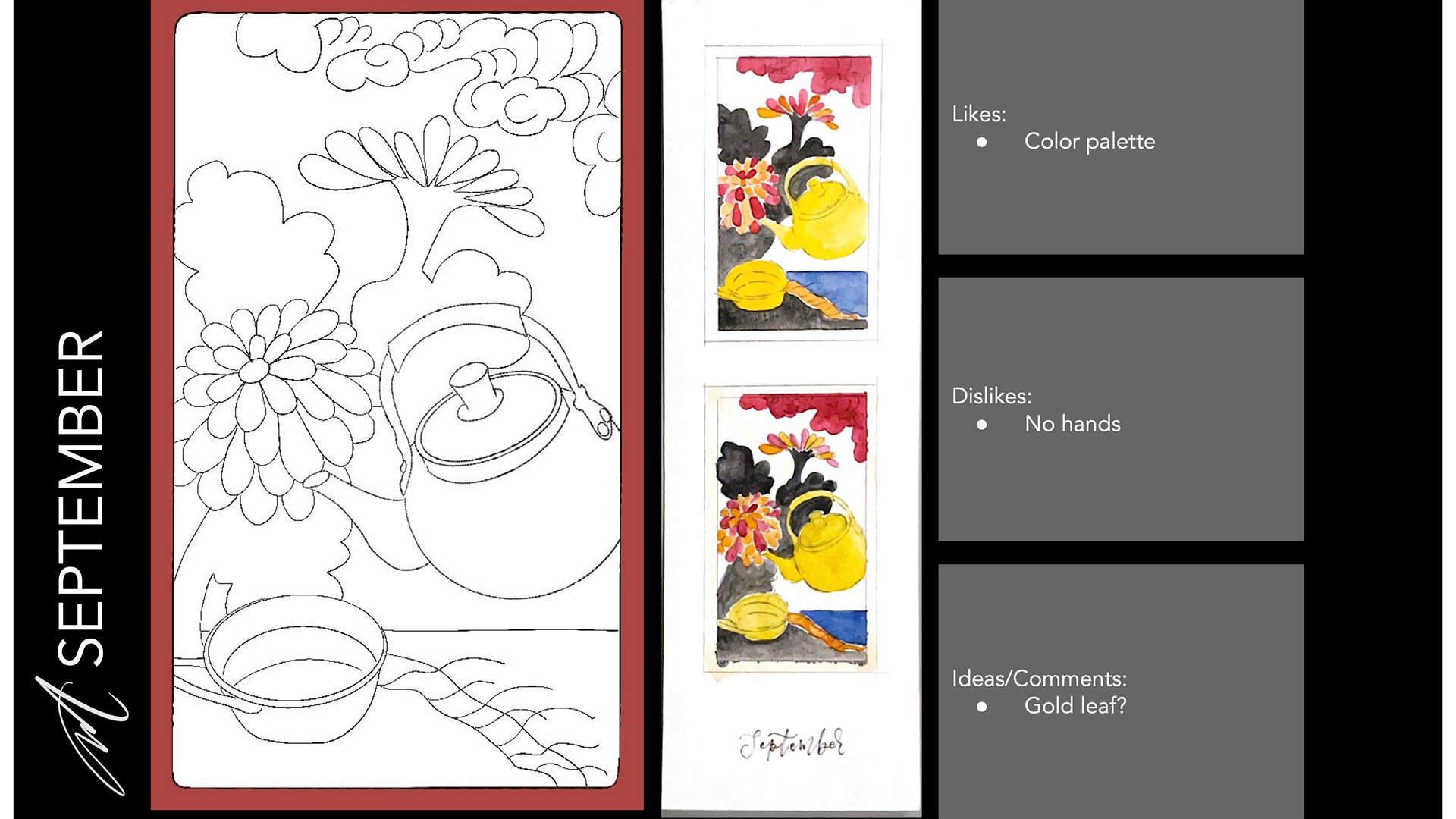
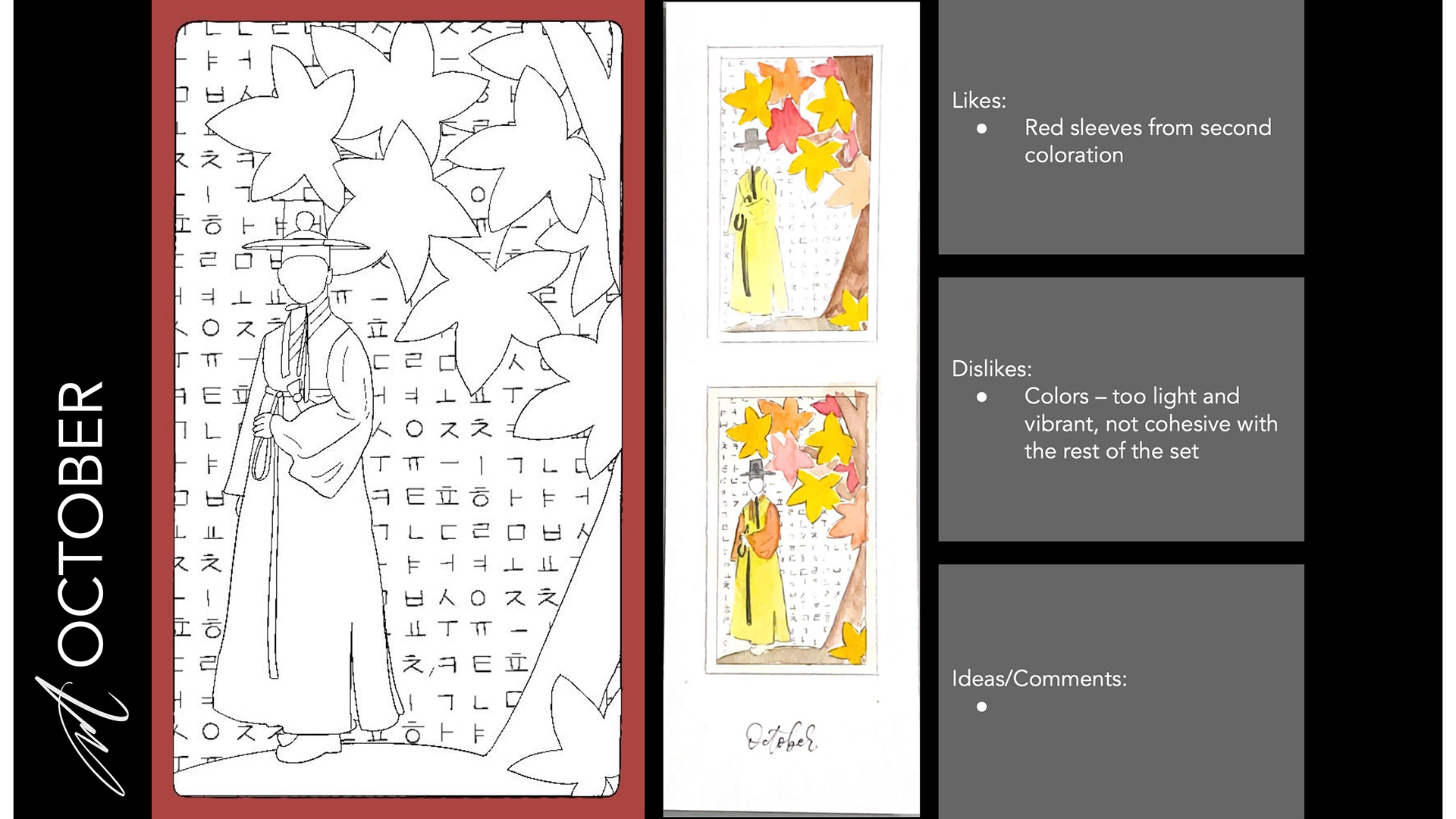
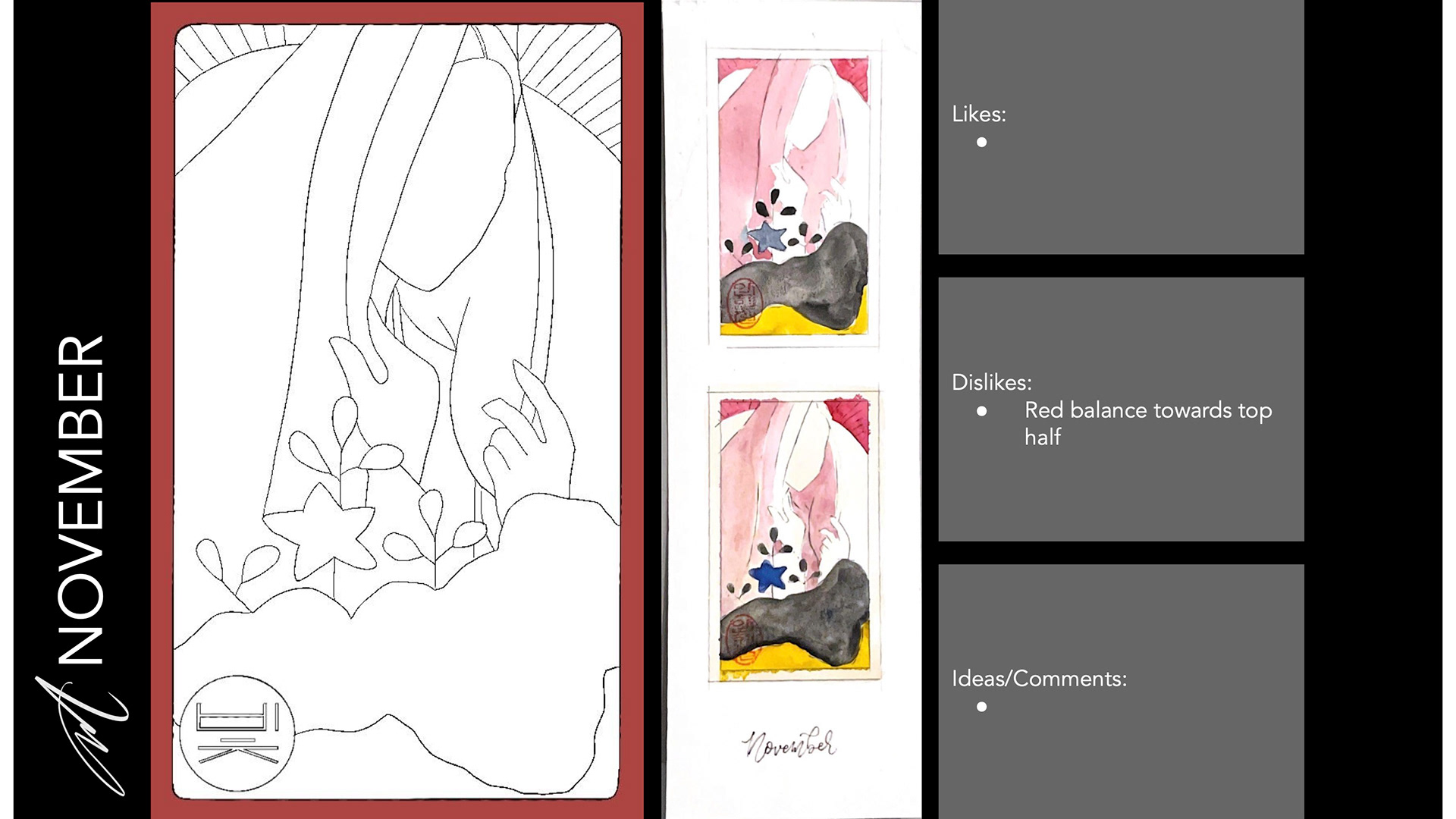
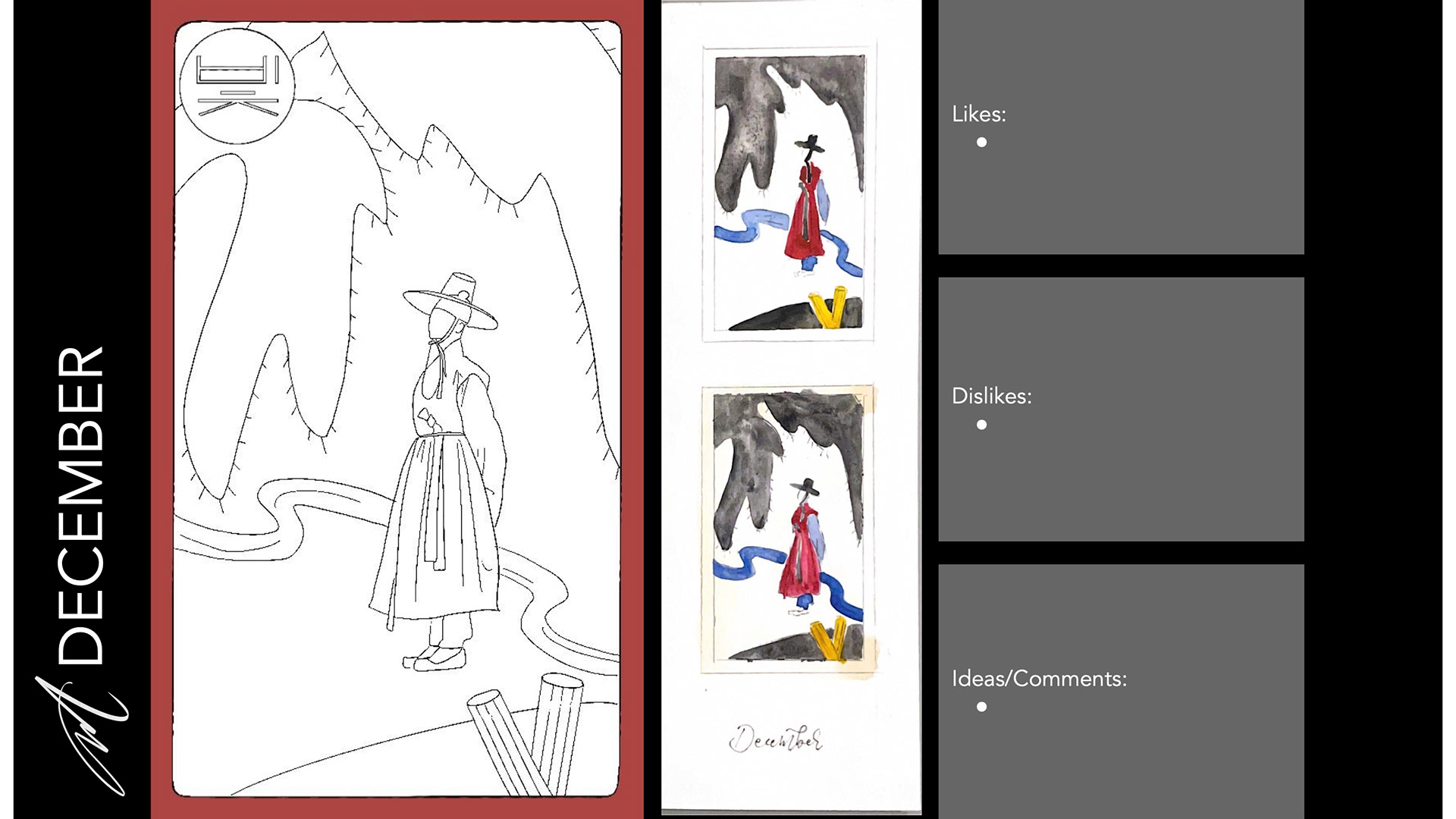
My adaptational design of the hwatu (화투) deck inserts and features:
- women and men in hanbok (한복)
- the traditional Korean garment
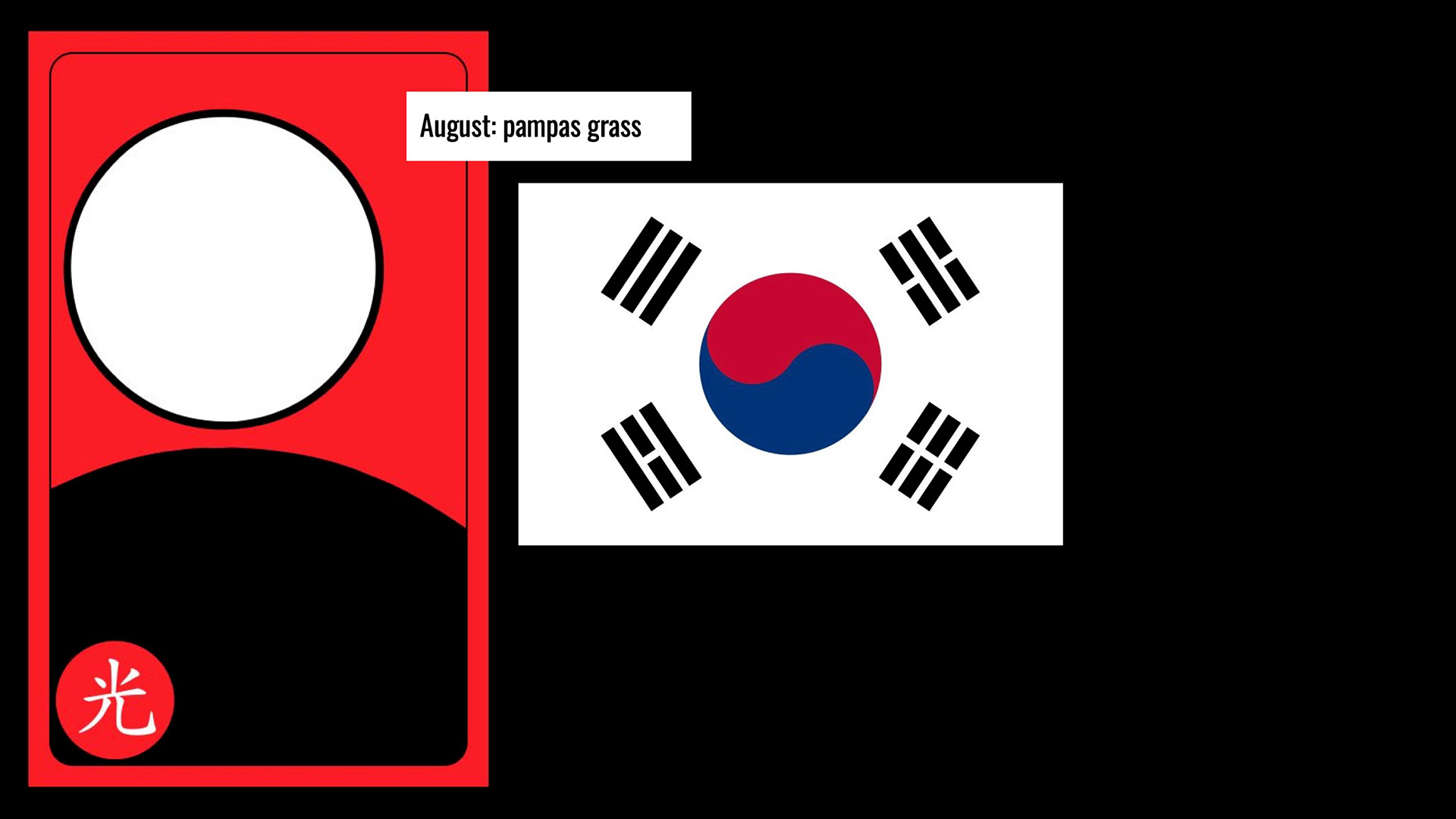
- elements of taegeukgi (태극기)
- the South Korean flag; hangul (한글)
- the Korean alphabet; mugunghwa (무궁화)
- the national flower of South Korea
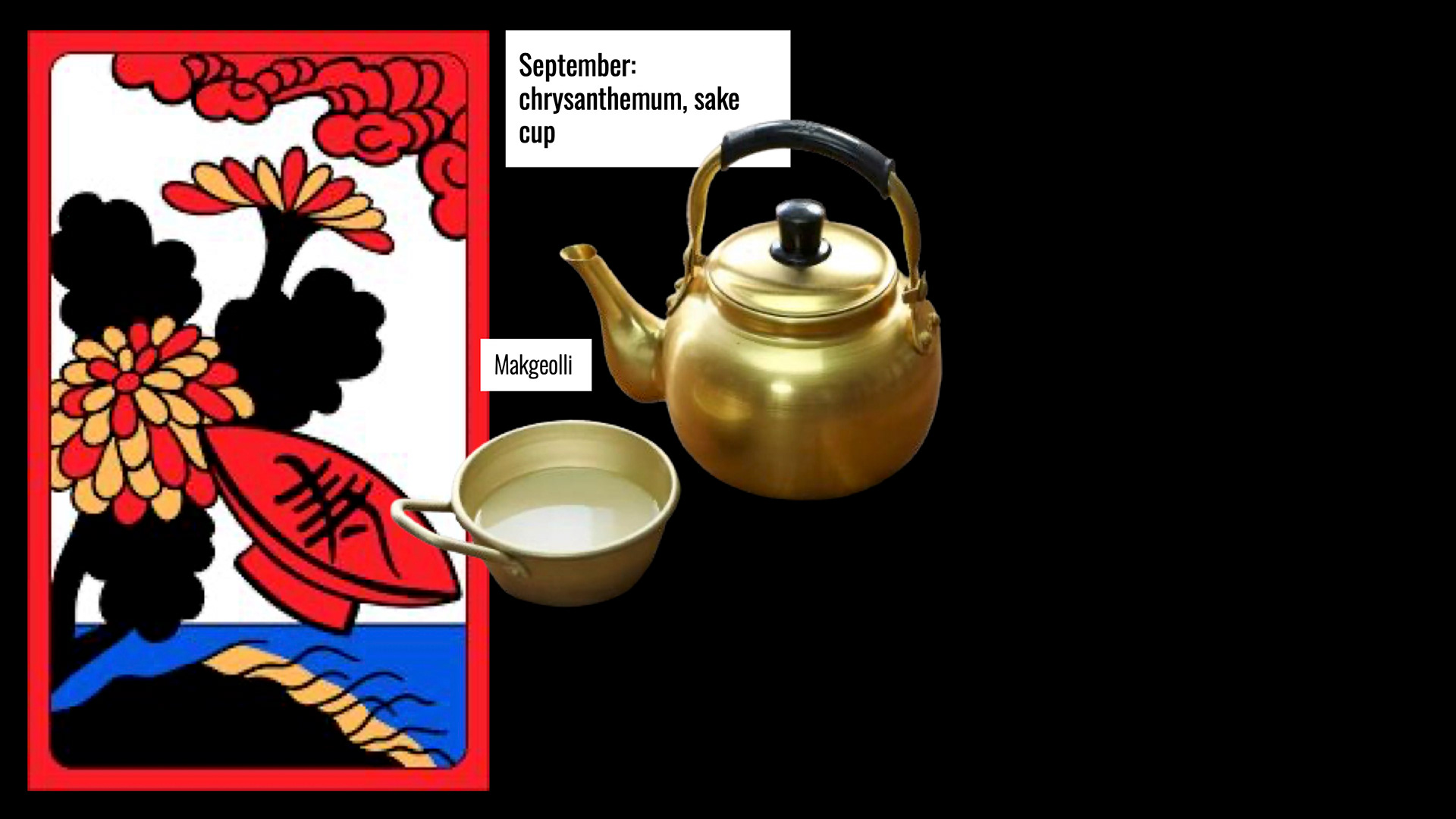
- makgeolli (막걸리), a Korean rice wine beverage
- yellow butterflies, a symbol of support for Korean comfort women
- a dojang (도장), personal signing stamp, with my Korean name on it
- women and men in hanbok (한복)
- the traditional Korean garment
- elements of taegeukgi (태극기)
- the South Korean flag; hangul (한글)
- the Korean alphabet; mugunghwa (무궁화)
- the national flower of South Korea
- makgeolli (막걸리), a Korean rice wine beverage
- yellow butterflies, a symbol of support for Korean comfort women
- a dojang (도장), personal signing stamp, with my Korean name on it
However, they remain compositionally, chromatically, and conceptually related to the original design, effectively speaking to the fascinating and inescapable narrative of transnationalism, nationalism, and colonialism contained within the history of the deck.
Initial Ideation
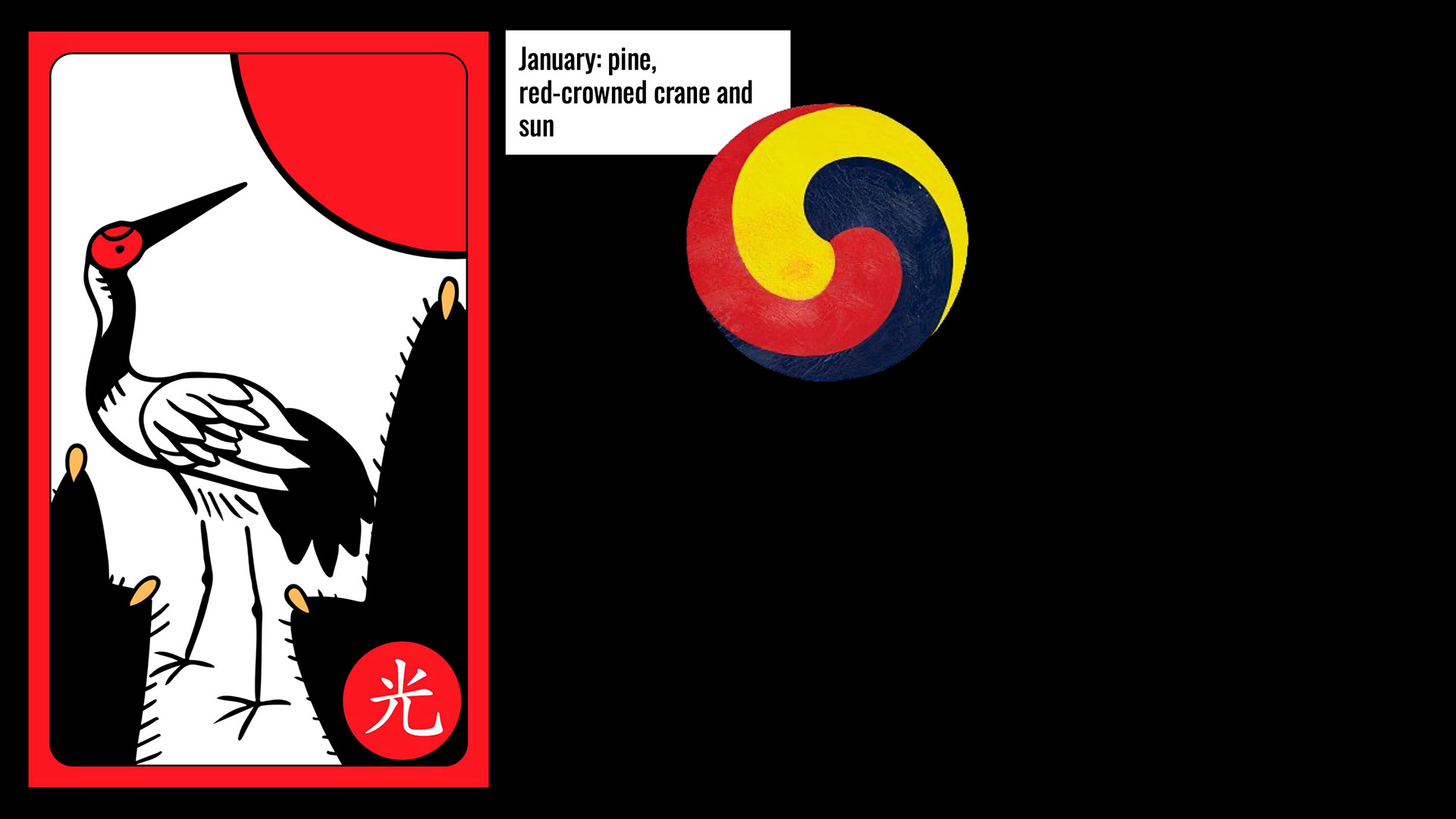
Figurations & Color Plotting
More in Visual Design